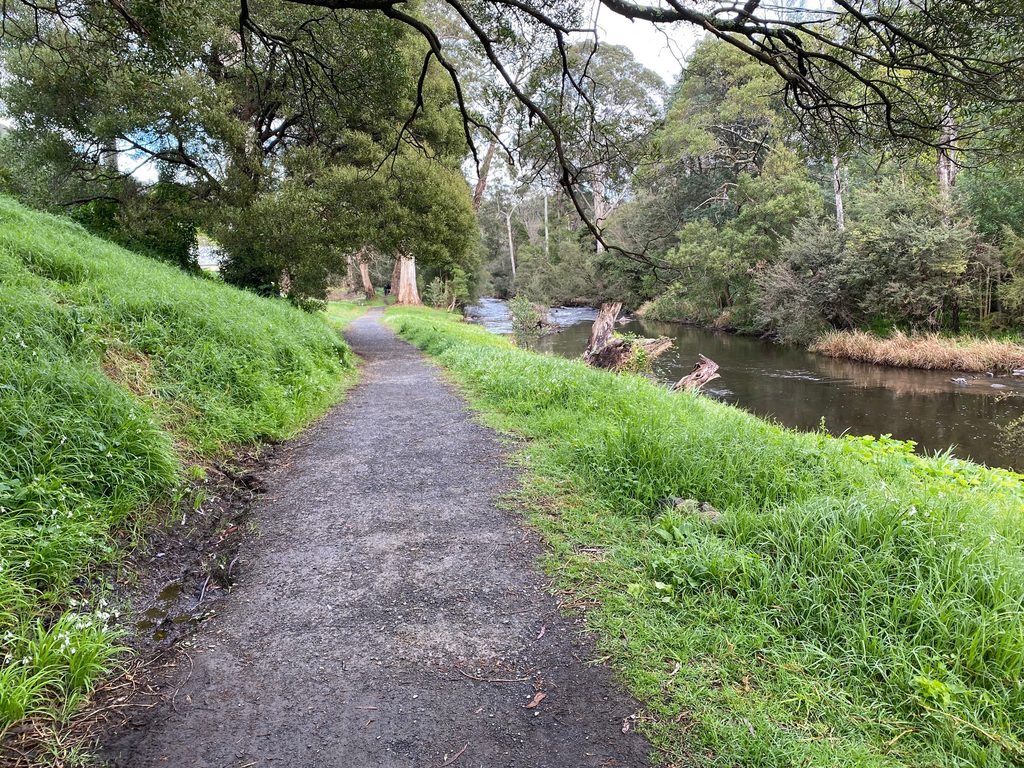
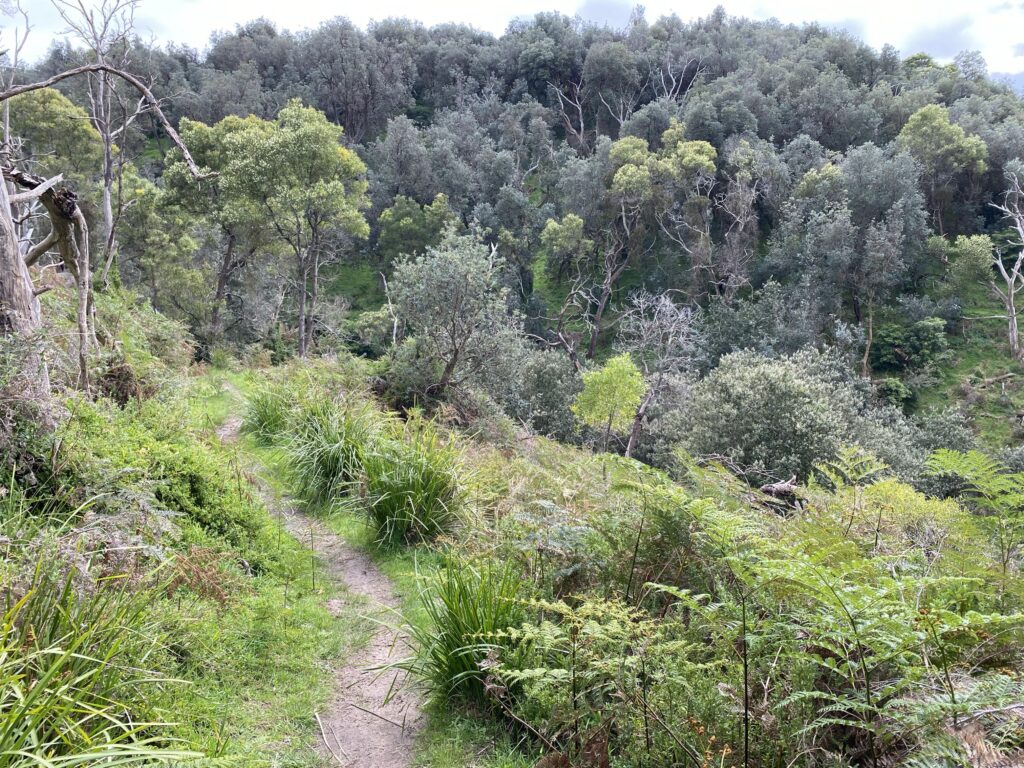
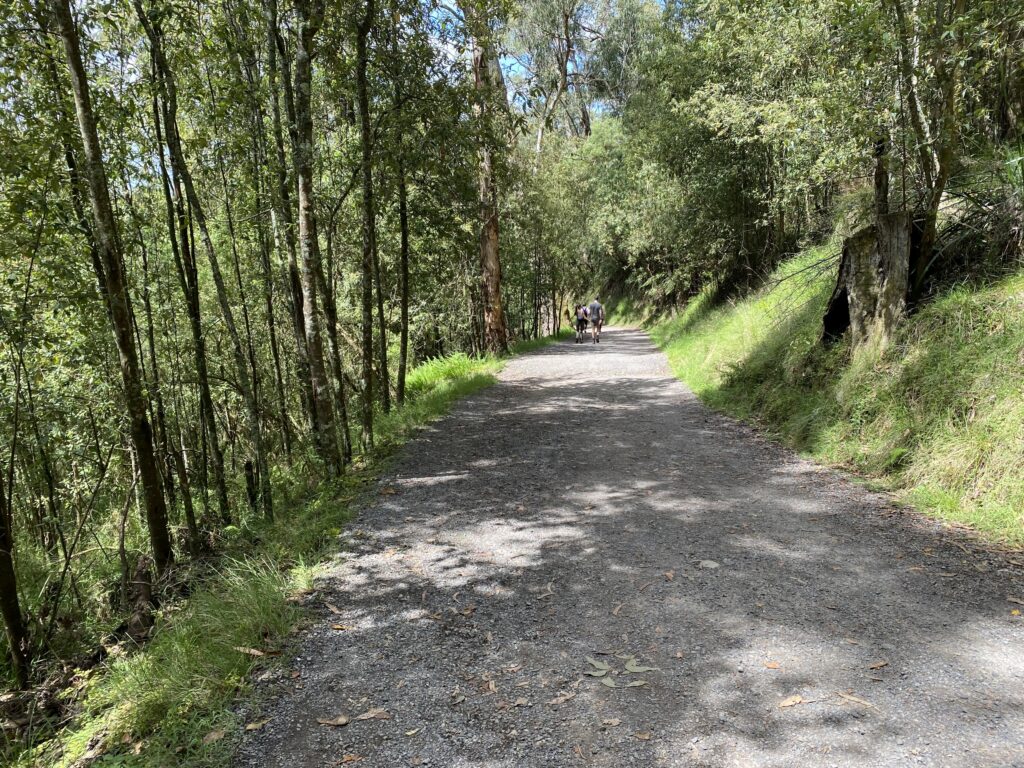
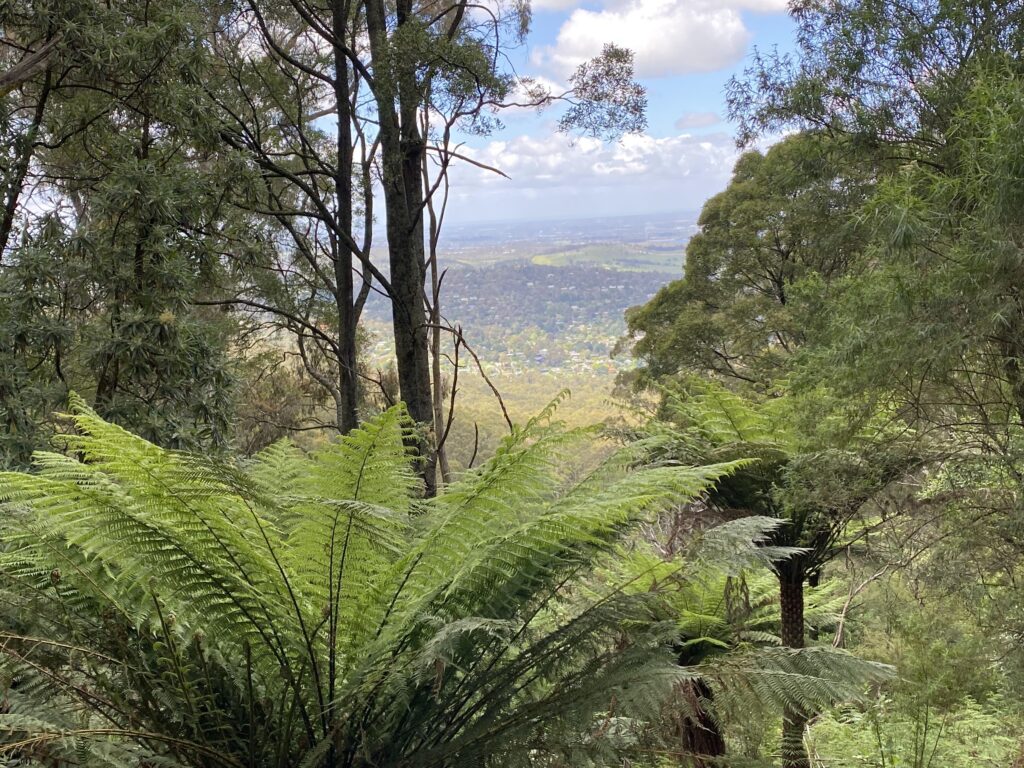
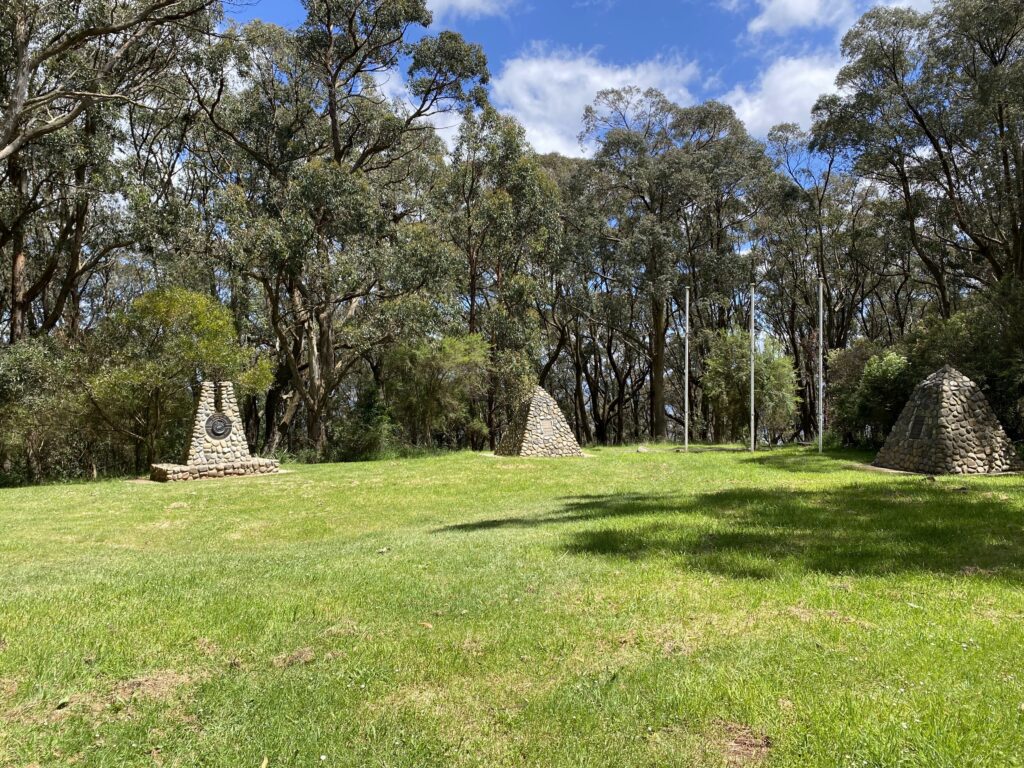
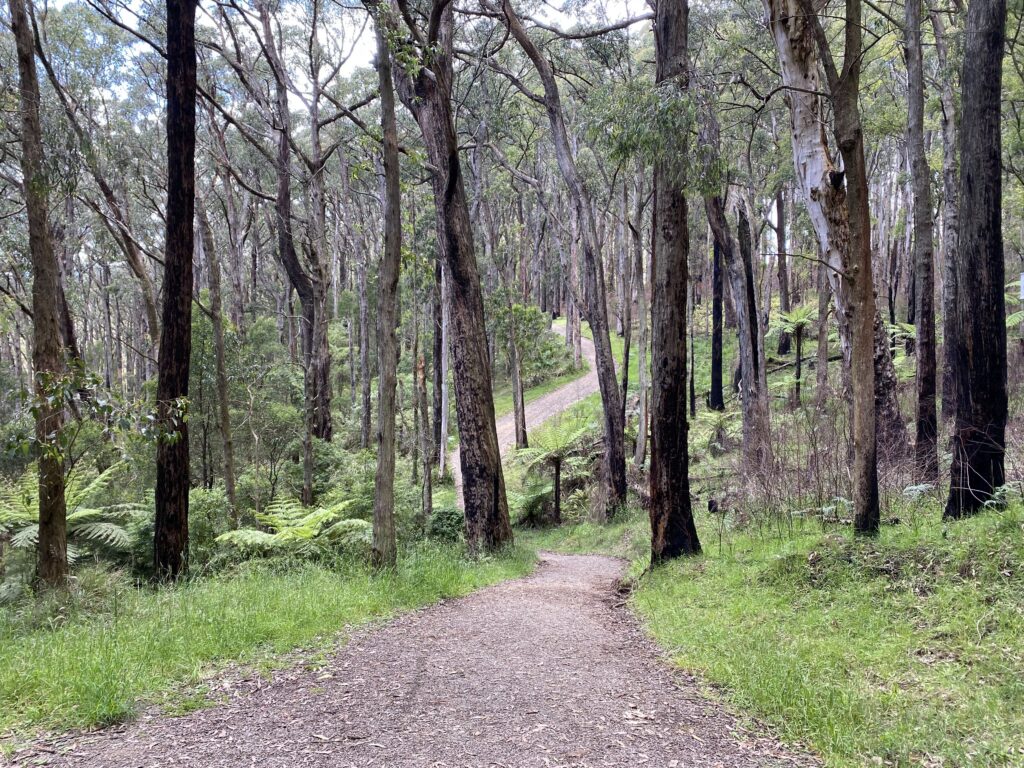
We took a bicycle trip to Warburton over the long weekend in September. We rode about 40 km on the Lilydale to Warburton Rail Trail and stayed overnight in Warburton.
Unfortunately, it rained relentlessly, and we arrived in Warburton wet, cold and dirty. Our hotel didn’t have laundry and we hadn’t brought any spare clothes, so we spent the rest of the day in our room waiting for our clothes to dry.
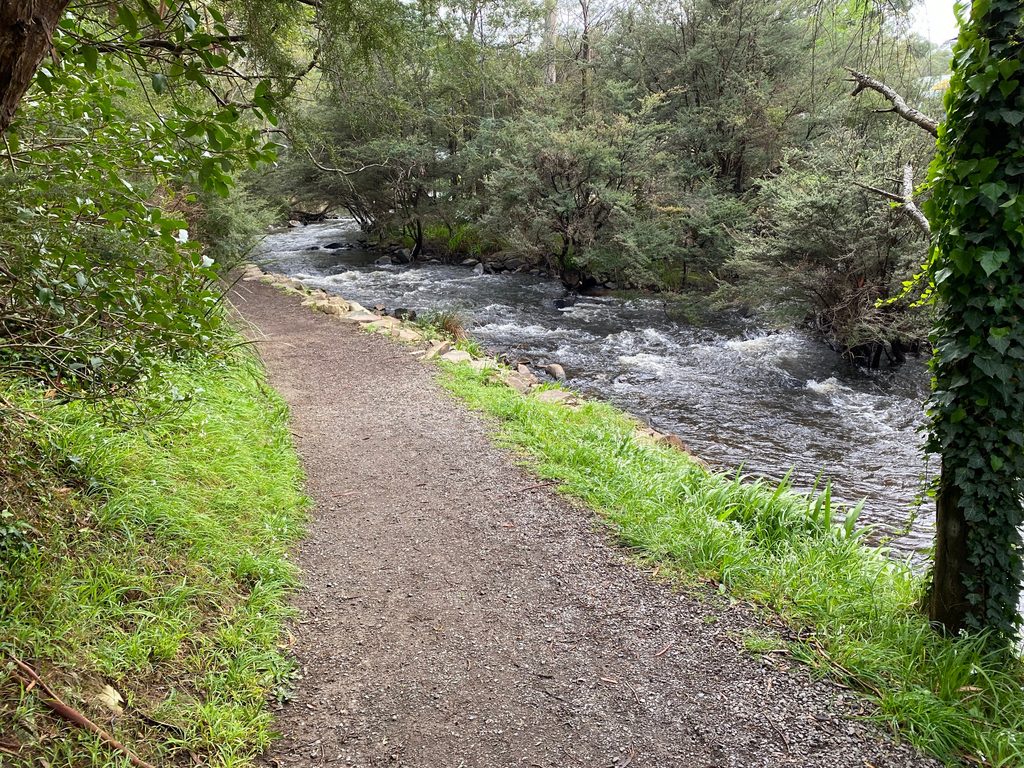
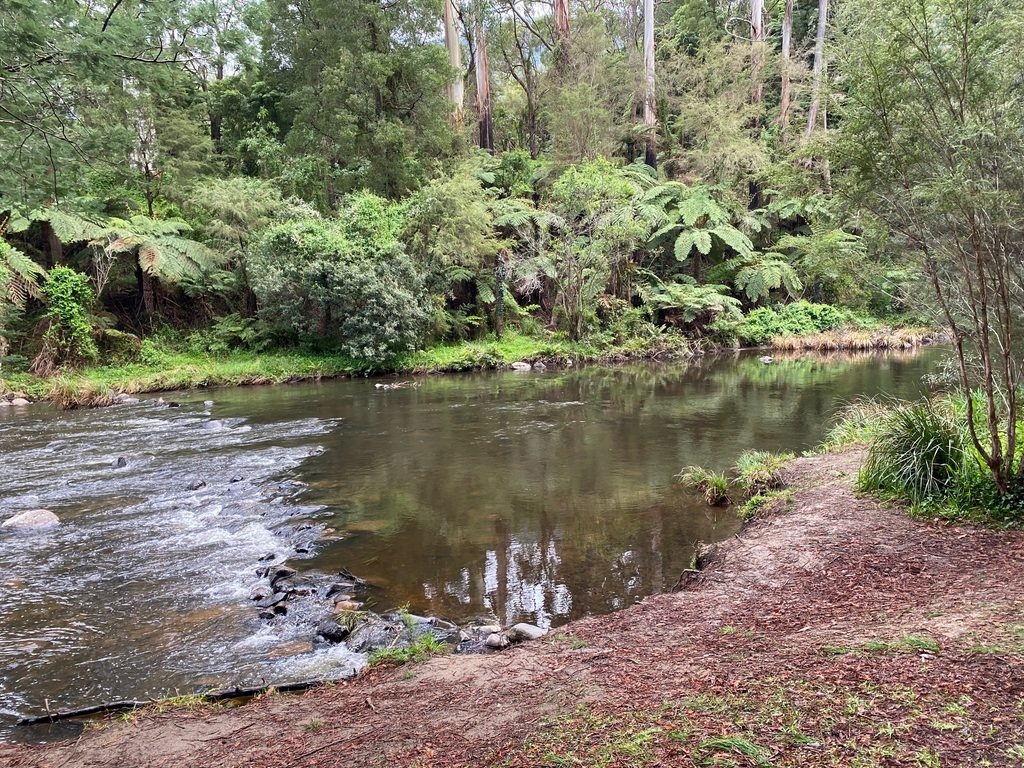
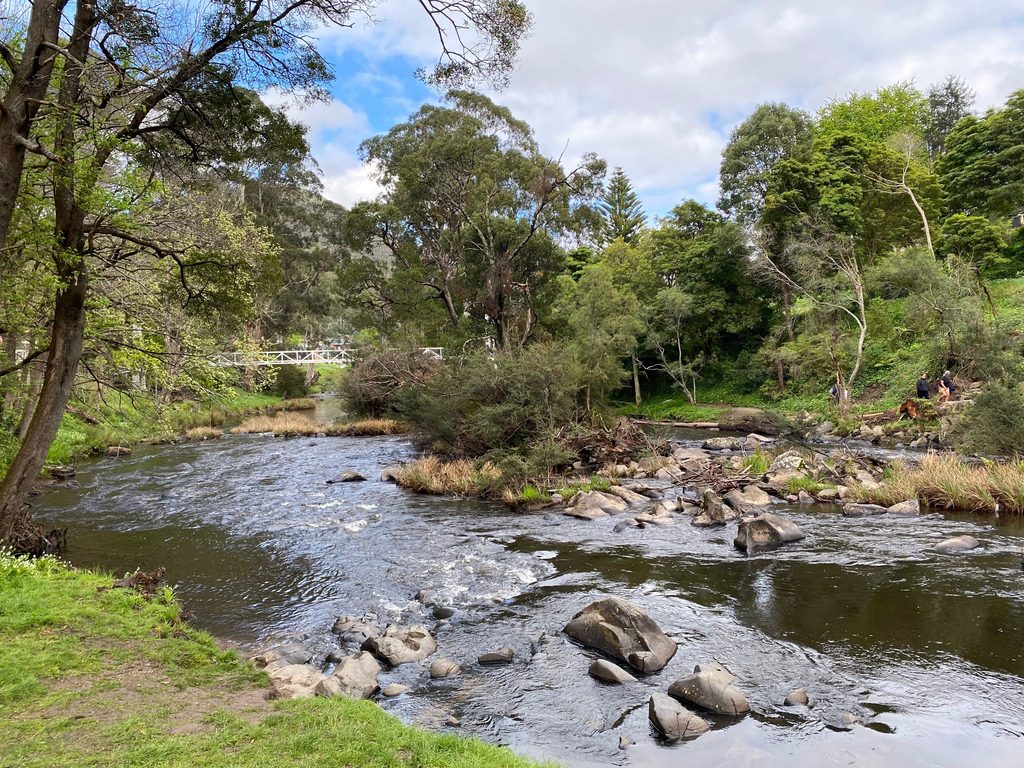
The next morning was nice and we went for a walk along the Yarra River. Our hotel (Alpine Hotel) was right next to the trail.
Sign with map
Sign reads:
Upper Yarra River Reserve Walking Tracks Warburton Beware of track hazards – proceed with care Birrarung
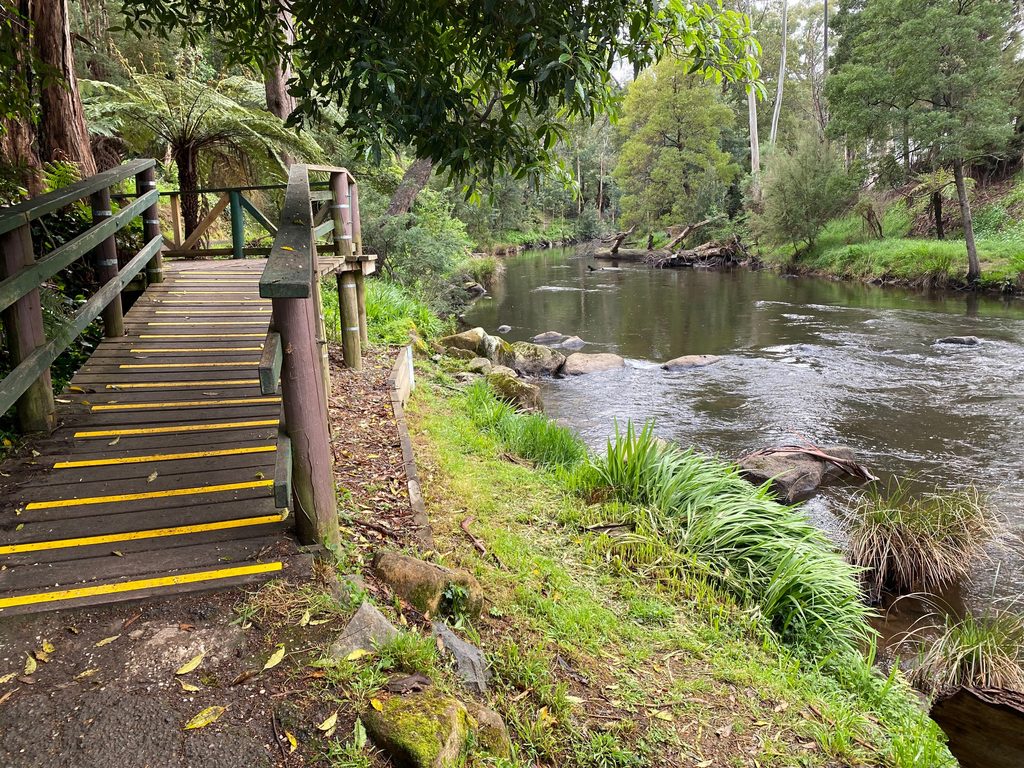
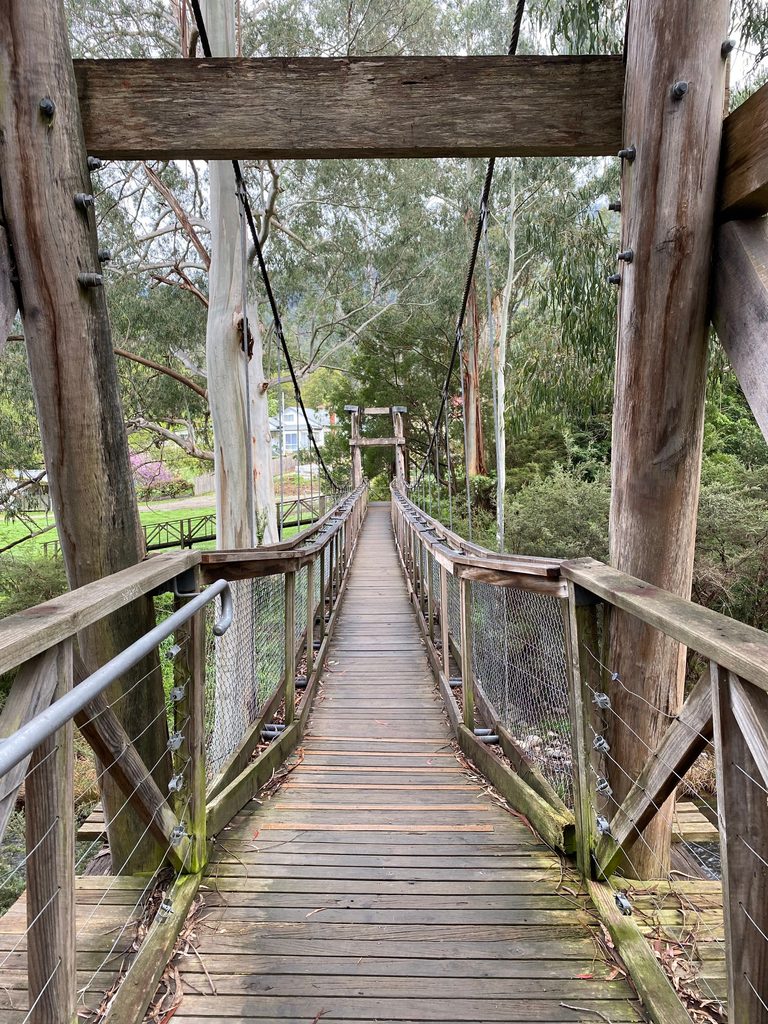
We came across (and crossed) few nice bridges.
Suspension bridge
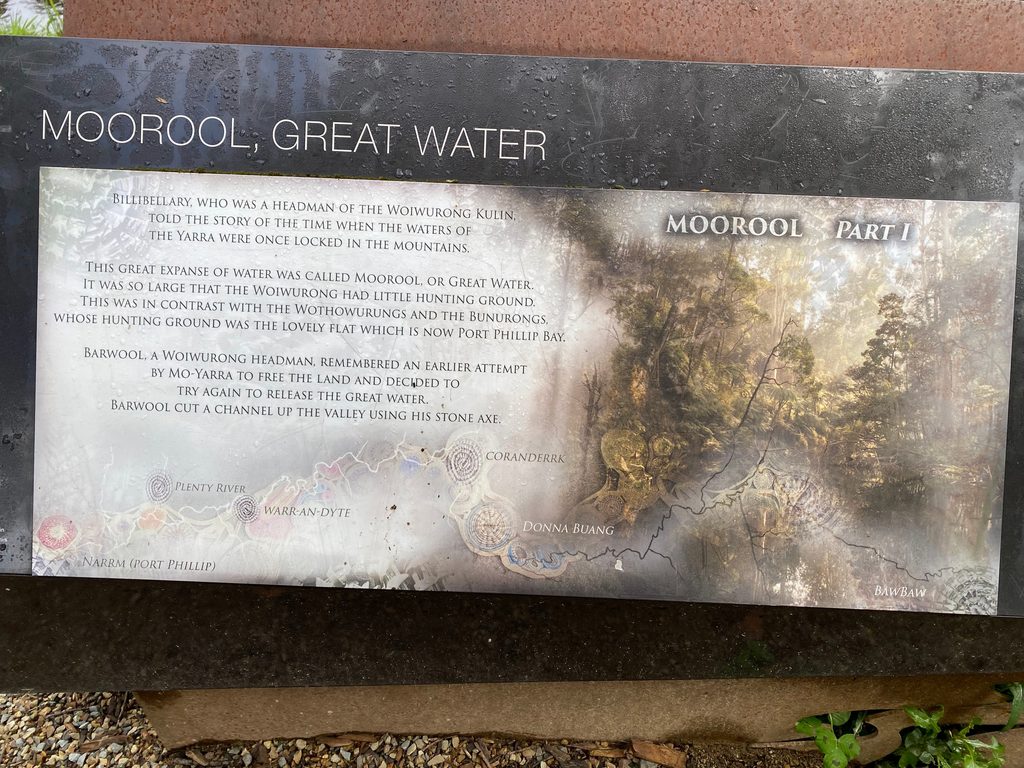
Sign reads:
Moorool, Great Water
Billibellary, who was a headman of the Woiwurrung Kulin, told the story of the time when the waters of the Yarra were once locked in the mountains.
This great expanse of water was called Moorool, or Great Water. It was so large that the Woiwurrung had little hunting ground. This was in contrast with the Wothowurungs and the Bunurongs, whose hunting ground was the lovely flat which is now Port Phillip Bay.
Barwool, a Woiwurrung headman, remembered an earlier attempt by Mo-Yarra to free the land and decided to try again to release the great water.
Barwool cut a channel up the valley using his stone axe.
It was a very pleasant walk. If you are in Warburton, I definitely recommend it. We walked about 5 km total.
We went to Peninsula Hot Springs for our anniversary. This time we decided to stay overnight in Rye. Our plan was to go on a hike on the next day. After some deliberation, we decided to do the Greens Bush walk.
We started from Bushrangers Bay picnic area because it was closer to the ocean which we wanted to visit too.
Greens Bush walk is part of popular Two Bays Walking track. There were a lot of cars parked at the trailhead.
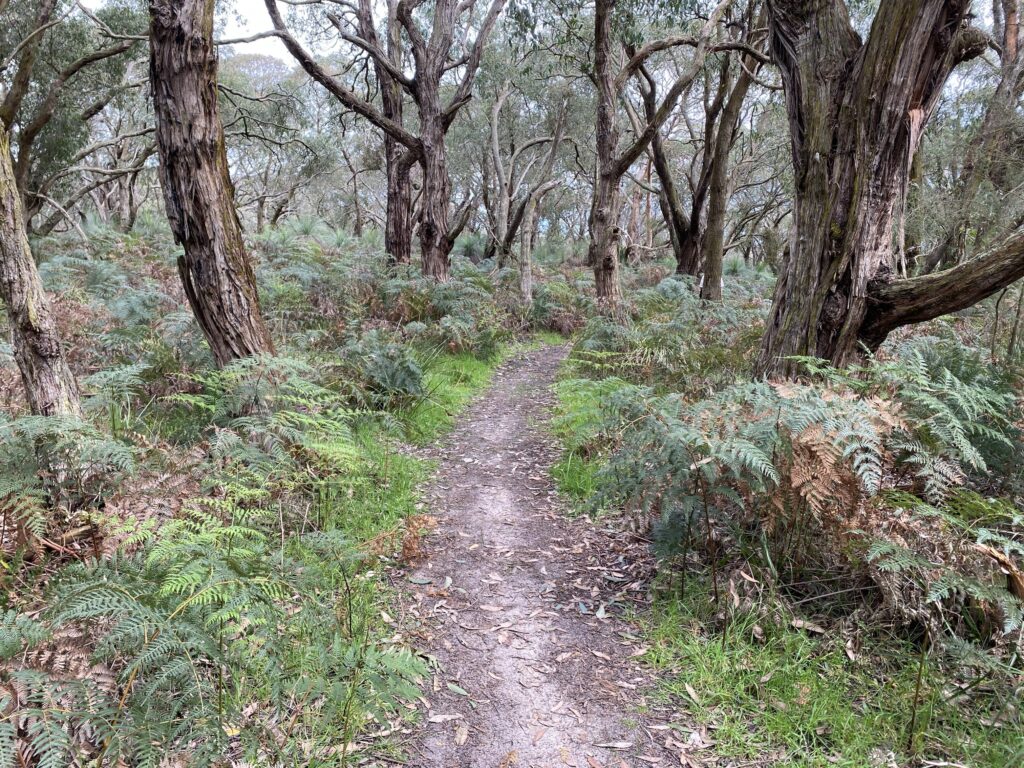
The trail was narrow and only wide enough for us to walk single file. It was a soft dirt trail.
We came across the first sign. It reads:
Life in the bush
In the past, Bunurong peoples travelled across Biik (Country) according to the seasons, enjoying its sustaining resources while also giving Biik time to rejuvenate. One of the most important songlines (pathways across Country) on Bunurong Country starts at the top of Naarrm (Port Phillip) and passes through Murdi Yaluk (Mordialloc) and Arthurs Seat, Munmur (Point Nepean) and Cape Schanck. Songlines like this one can be linked to lore, ceremonies and rituals and the fundamental interconnection between Bunurong peoples and Country.
Mornington Peninsula National Park’s walking trails link the majestic woodlands, grass tree meadows and noisy wetlands of Greens Bush to the coastal shrubs and basalt headlands of Cape Schanck and Fingal. This diverse landscape is habitat to many animals that need your help to thrive. These cryptic species are all around you, sheltering in the nooks of old trees or nesting in leaf litter on the woodland floor. Look for signs of life as you explore the park, tread gently and help care for their home.
White-footed Dunnart
While you’re sleeping, the understorey is busy with the darting and scuttling of White-footed Dunnarts (Sminthopsis leucopus). As nocturnal and carnivorous marsupials, their sharp teeth and claws make light work of captured insects, skinks, and small lizards. By day, they shelter in nests of bark and leaf litter under logs or grass tree skirts. Males mate frantically through July and August and often die from exhaustion before their first birthday, while females raise their offspring.
Powerful Owl
Look up while exploring these shady trails and you may lock eyes with Australia’s largest nocturnal bird – the Powerful Owl (Ninox strenua). With a wingspan of 140cm, they swoop effortlessly through the canopy to snatch arboreal animals, including ringtail and brushtail possums, and roosting birds. Their strong feet and sharp talons have perfectly evolved to grasp moving prey. The moist, forested gullies of Greens Bush provide ideal roosting sites in Blackwood and Muttonwood trees, while old eucalypts offer hollows for nesting. Pairs mate for life, sometimes for over 25 years, and defend their territory year-round.
Lewin’s Rail
A pressing ‘tek-tek-tek-tek-tek’ echoing through the undergrowth may be the only clue you’re within cooee of a Lewin’s Rail (Lewinia pectoralis). Taking refuge in the dense vegetation and reed beds surrounding fresh and saline wetlands, local sightings are as rare as the birds themselves. Most active at dawn and dusk, this elusive bird forages in shallow water for seeds and small invertebrates, like worms, snails and insects.
Koala
Evolved for life in the canopy, Koalas (Phascolarctos cinereus) have strong limbs and sharp claws that help them grip and climb. A tough, bony plate at the base of their spine allows them to rest comfortably in tree forks for hours at a time. And it’s just as well – a nutrient-poor and mildly toxic diet of eucalyptus leaves means they sleep for up to 20 hours a day. Mostly active at night, koalas move between trees to feed. During the breeding season, deep, raspy bellows help attract mates and deter rivals.
Dusky Antechinus
Largest of Victoria’s antechinus species, the Dusky (Antechinus swainsonii) is an energetic predator. Active day and night, it uses its sharp claws and teeth to capture and consume skinks and soil invertebrates. Males live fast and die young, often succumbing after their first frantic spring breeding season. Females, however, build nests from leaves in shallow burrows, where they can live up to three years, raising young in the shelter of dense undergrowth.
Southern Toadlet
Tiny, ground-dwelling frogs, Southern Toadlets (Pseudophryne semimarmorata) shelter under logs and leaf litter in damp depressions near wetlands. Preferring to walk rather than hop, adults rarely stray more than five metres from their breeding site. The breeding window is narrow. Males begin calling for mates after the first autumn rain, and stop when nights dip below 10°C. They prepare shallow burrows where females lay eggs, then wait for flooding rain to trigger hatching and tadpole dispersal to larger bodies of water. Tadpoles metamorphose into toadlets by summer, and with luck, individuals can live for up to 10 years.
White-striped Freetail Bat
White-striped Freetail Bats (Austronomus australis) are fast-flying insectivores that hunt beetles, moths, and grasshoppers above the tree canopy in the dark of night, reaching speeds up to 43kph. Listen carefully into the evening – their echolocation call, a sharp ‘ting-ting-ting’, is one of the few bat calls humans can hear. The largest of Australia’s free-tail bats, they roost in open cavities of old eucalypts. Spacious hollows can accommodate maternity colonies of up to 300 individuals!
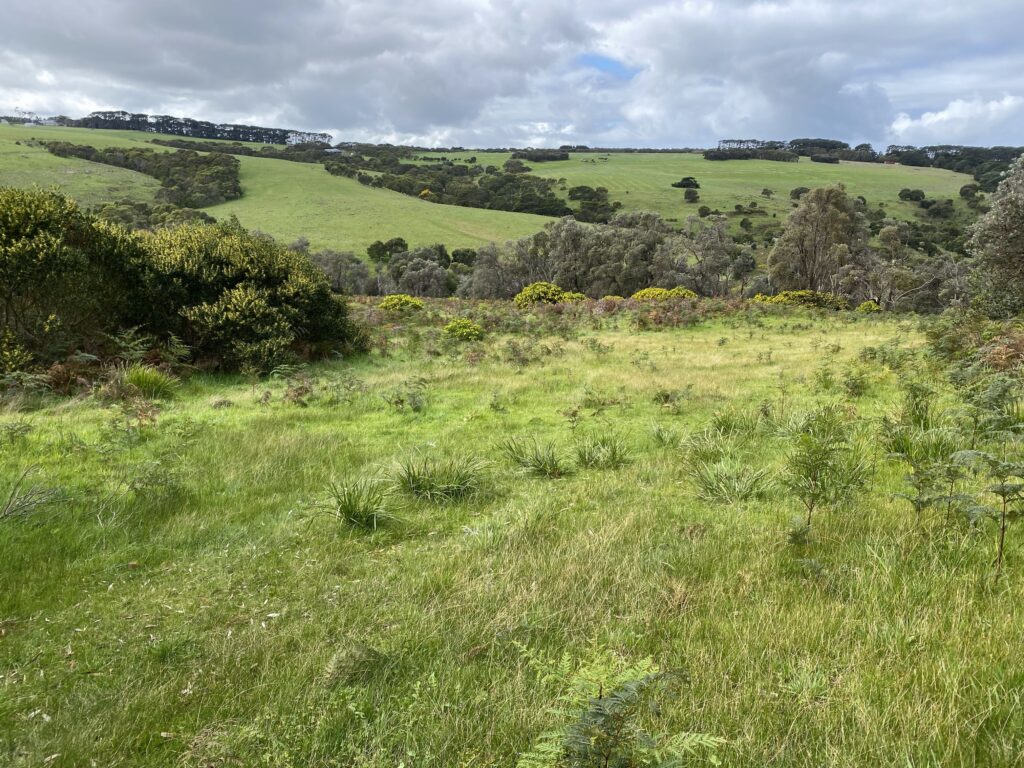
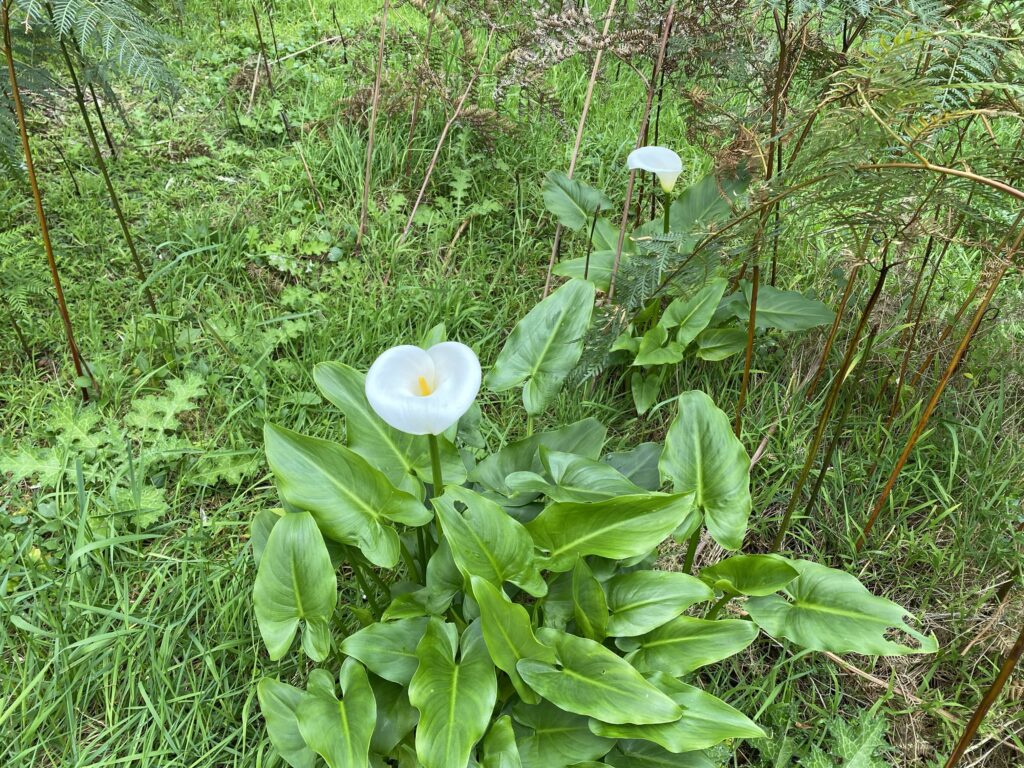
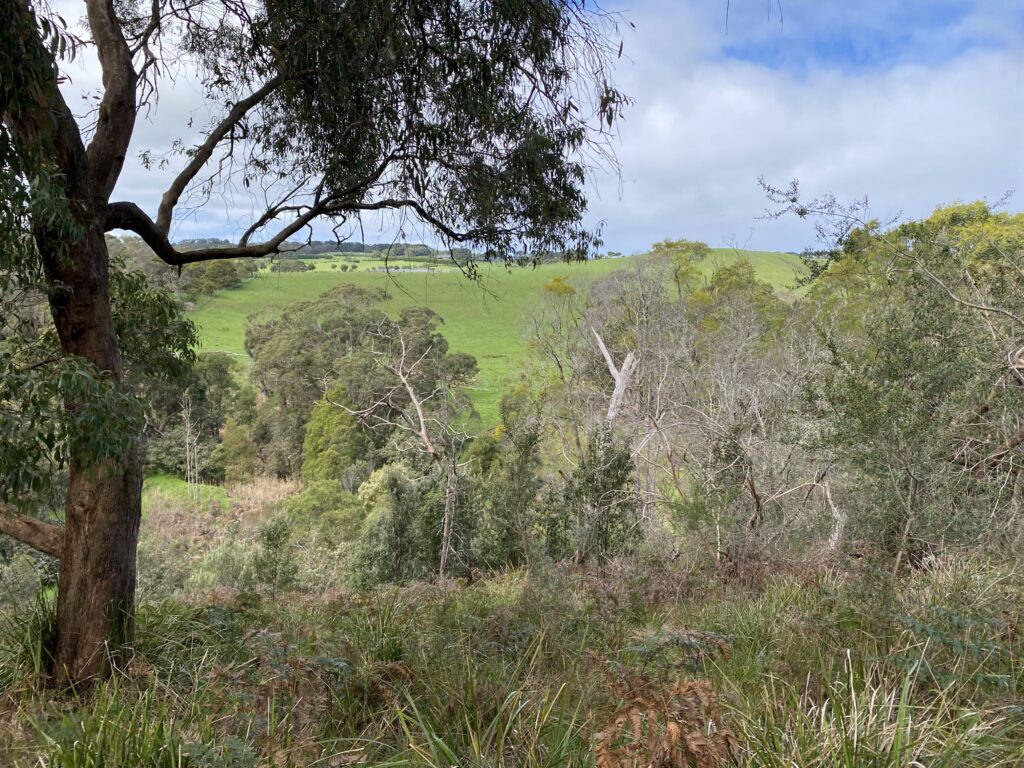
Nice view across hillsArum Lily
We reached Lightwood Camp and saw another sign with a map:
Sign reads:
Situated between Arthurs Seat and Cape Schanck on the Mornington Peninsula, Greens Bush is the largest remnant bushland on the peninsula. Surrounded by farmland, this island of native habitat is a wildlife haven.
Peaceful surroundings and the natural beauty of the bush make this area excellent for walking, picnicking and observing nature. Explore the walking tracks that weave through Greens Bush and discover the many different vegetation communities in the park -from eucalypt forests to fern gullies, heathlands and grasslands.
Greens Bush is rich in birdlife, mammals and reptiles which live among the native plant communities. Look out for wrens, honeyeaters, parrots and birds of prey such as the Black-shouldered Kite and Wedge-tailed Eagle.
In the early morning or at dusk, you can often see kangaroos feeding in the open grasslands at Highfield and shy koalas are occasionally seen along Main Creek. Echidnas are a common sight foraging for ants along tracks. Swamp Wallabies prefer the forest and are well camouflaged in the shadows with their darker coat. Most of the mammals in the park are nocturnal. As the light fades, listen for the twittering of Ringtail Possums and Sugar Gliders.
We turned back once we reached North-South Break.
The weather was nice and sunny. It wasn’t hot in the beginning of September.
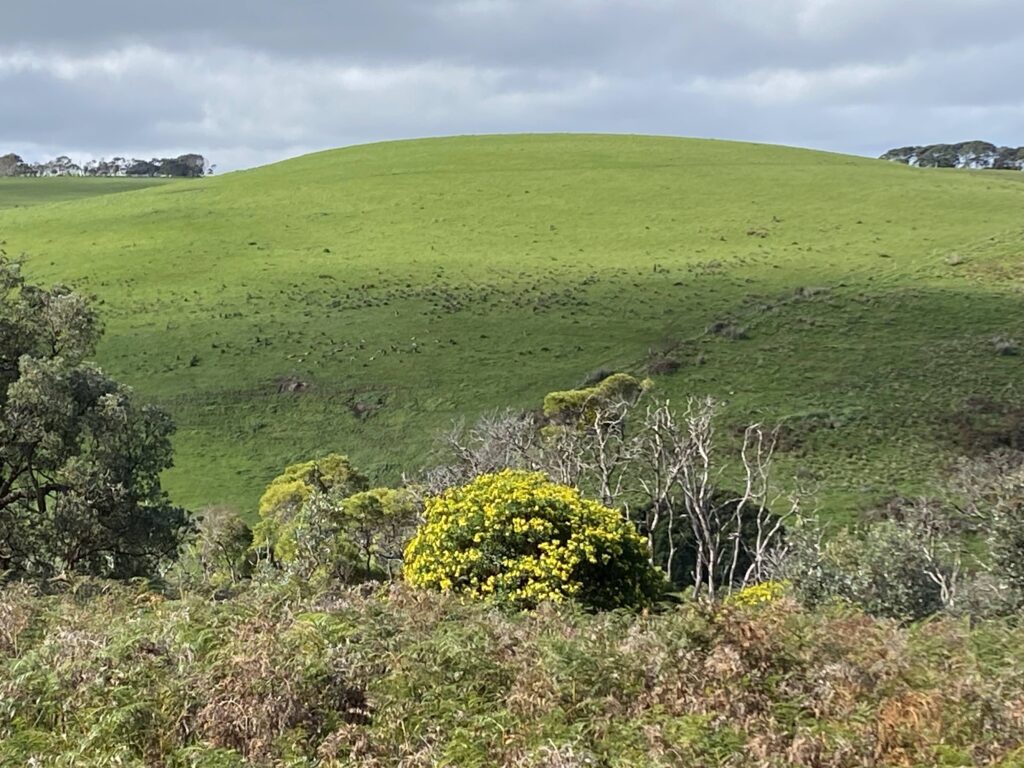
Nice rolling hill
Some of the spots on that hill are actually kangaroos resting on the grass.
We walked about 12.5 km total. Overall, it’s a great peaceful walk.
We had a lunch at the Hawkes Farm. Unfortunately we were short on time and decided to skip the ocean. We’ll come back to it later!
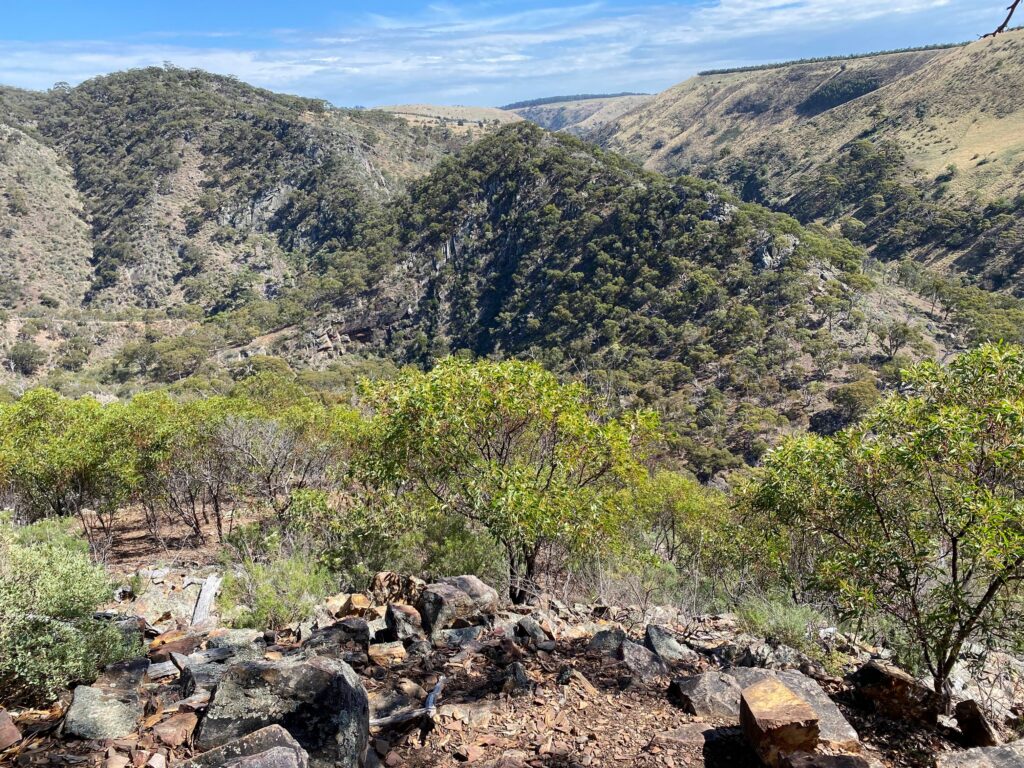
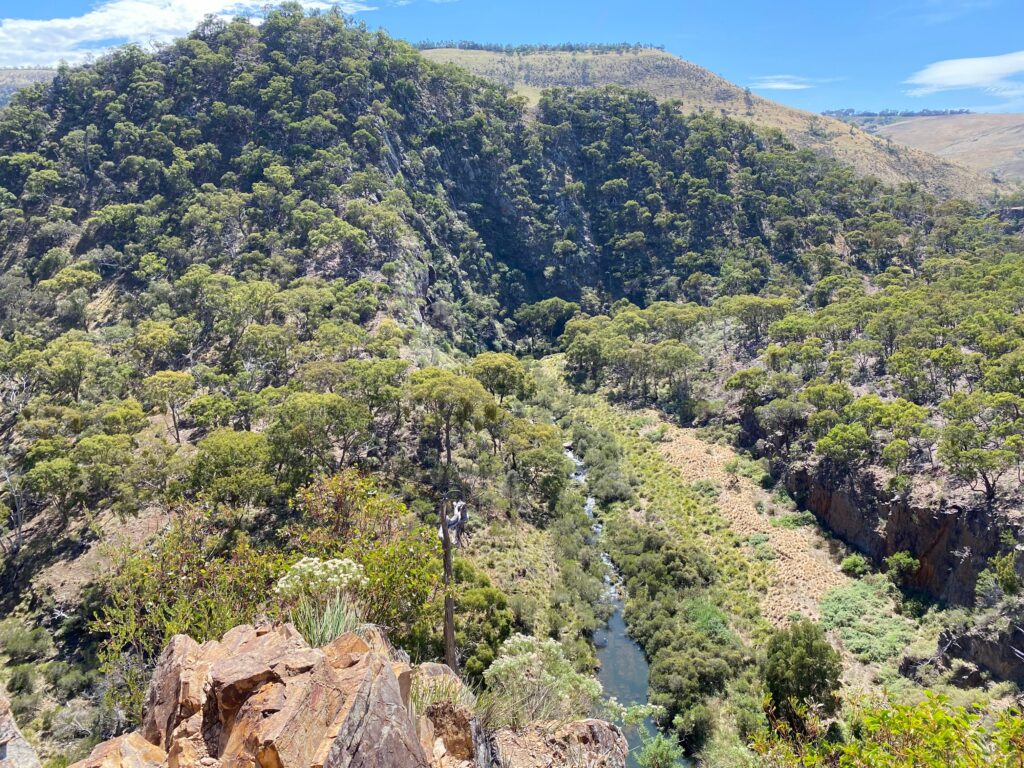
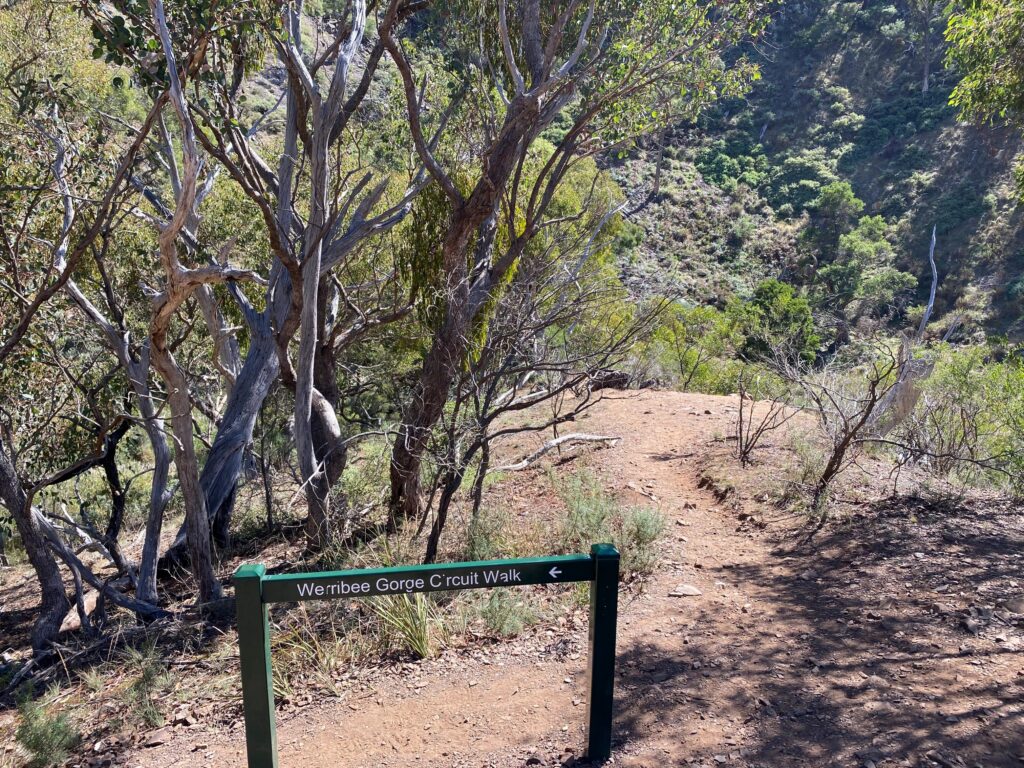
We did the Werribee Gorge Circuit on Sunday (March 2026). Actually we planned this walk some time ago but it was raining persistently on 4 weekends in a row. Finally the weather was fine.
Here’s the official description of the walk:
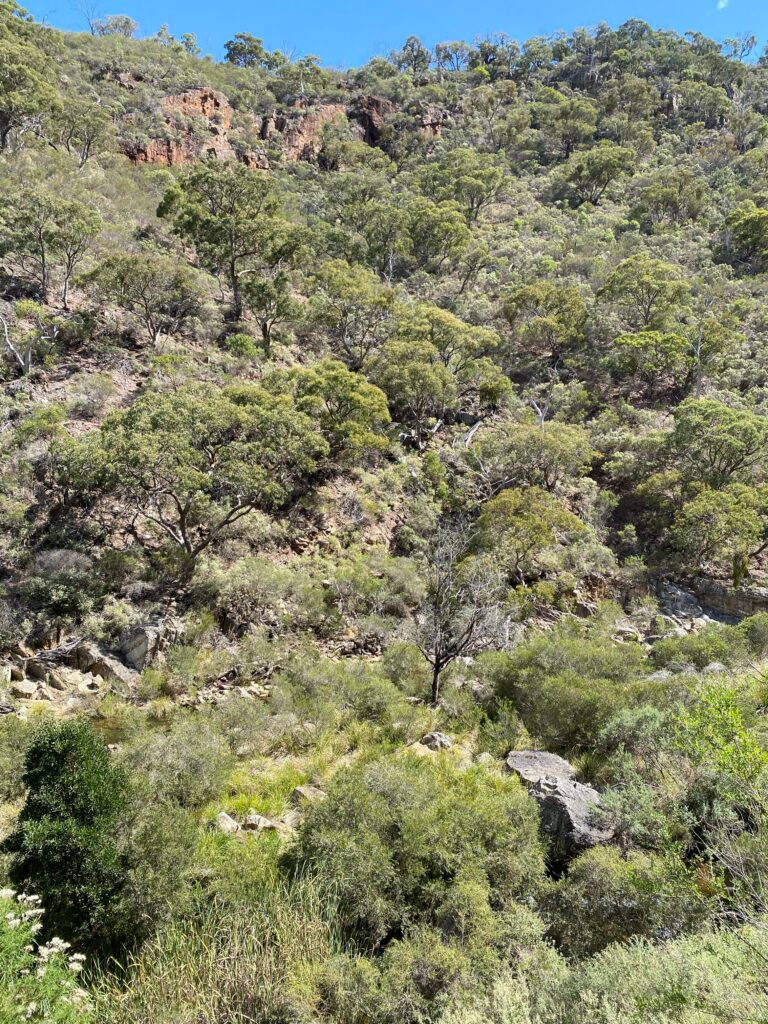
Start at one of three carparking locations on Myers Road. There are no shortcuts. Allow plenty of time and daylight. Walking anticlockwise returns you riverside along the clearly signposted track. It is steep in places with rock scrambling along sections of river-track. Excellent views are provided along the gorge rim. A 50 metre section of cable handrail is provided above the river upstream from Meikles Point Picnic Area.
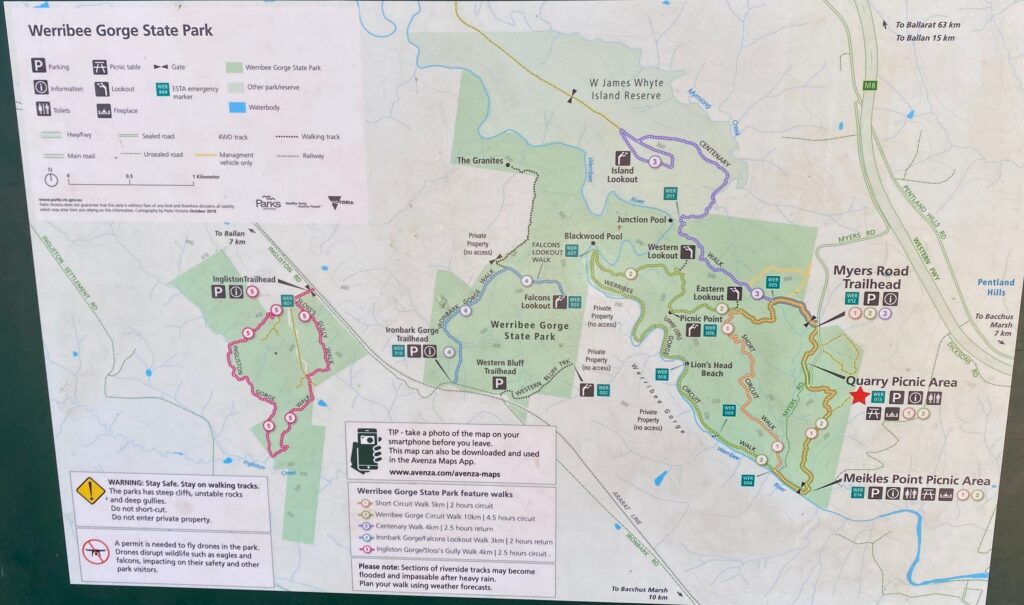
We started from the Quarry Picnic Area. The car park was almost full but we managed to find 2 free spots.
There is an information board with map, notices etc next to the car park.
Map of the Werribee Gorge State Park
Hikers are rescued from Werribee Gorge State Park every month. Complete this checklist to prevent becoming a statistic.
Do you have 3-4 litres of water?
Have you checked for fire or severe weather warnings? Sections of riverside tracks may become flooded and impassable after heavy rain.
Does this hike match your fitness ability? A moderate level of fitness is recommended.
Are you leaving enough time to complete the hike safely? Average: At least 2 hours is recommended for the short circuit and 4.5 hours for the long circuit.
Do you know the signs of heatstroke?
Do you have everything you need – like sunscreen, food and a map?
Are you dressed appropriately – hiking boots, long sleeves and pants, and hat recommended.
Does someone know where you are going?
If not, reconsider taking this hike today.
ESTA markers are located along the track, please use these if you need assistance.
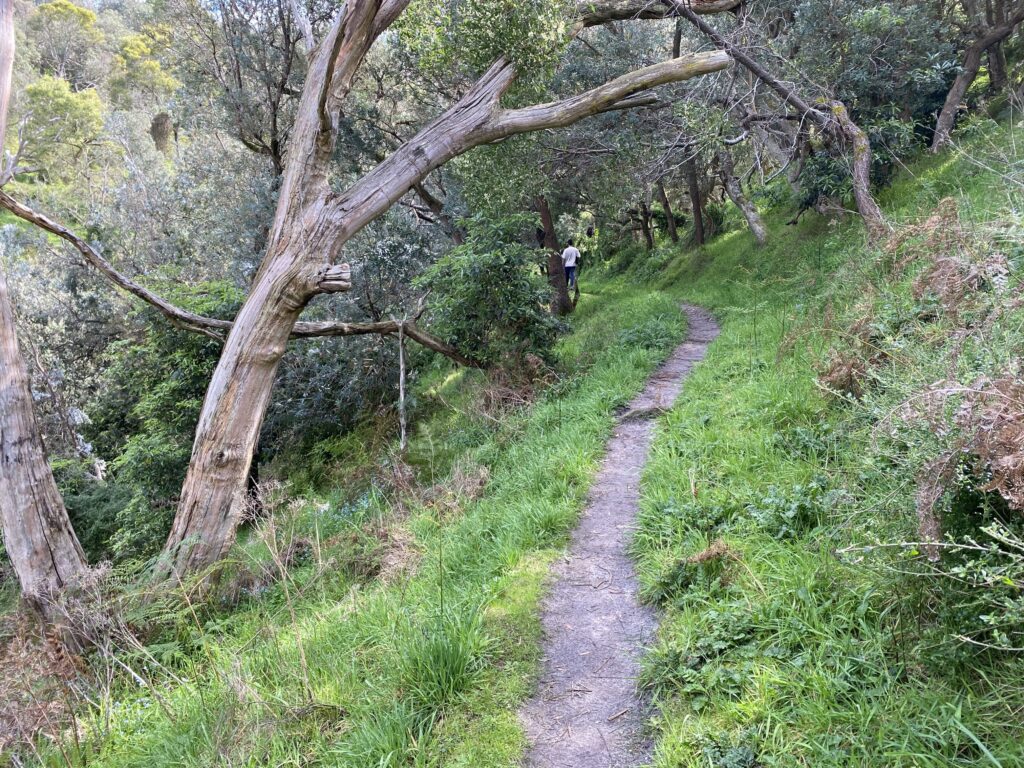
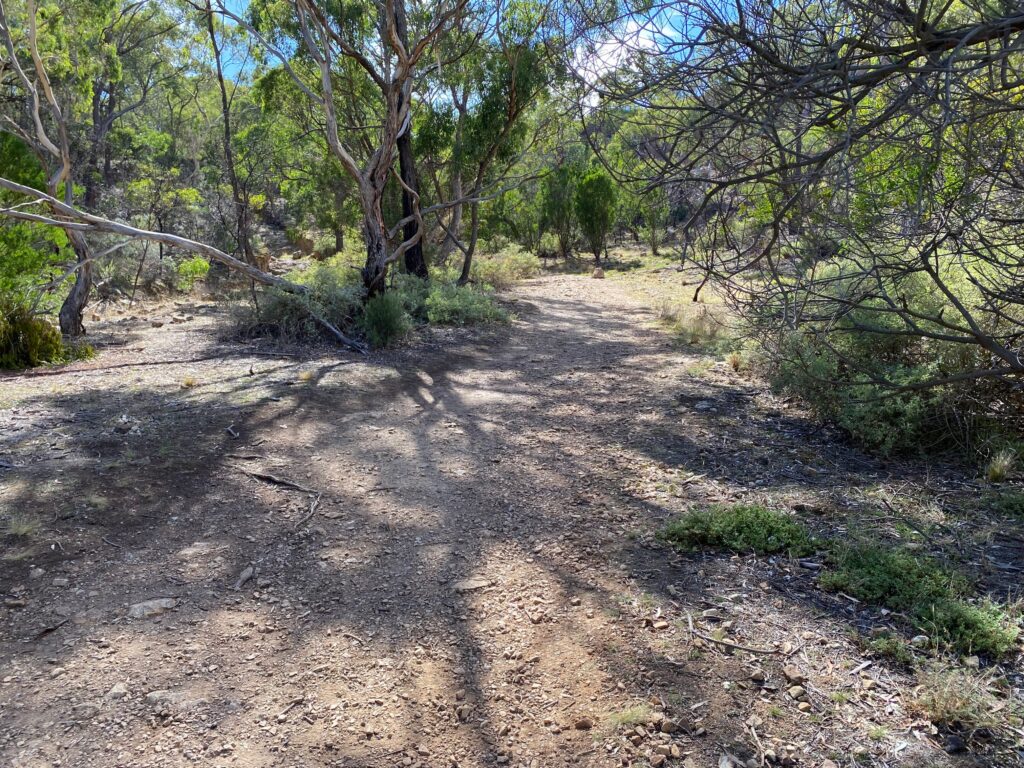
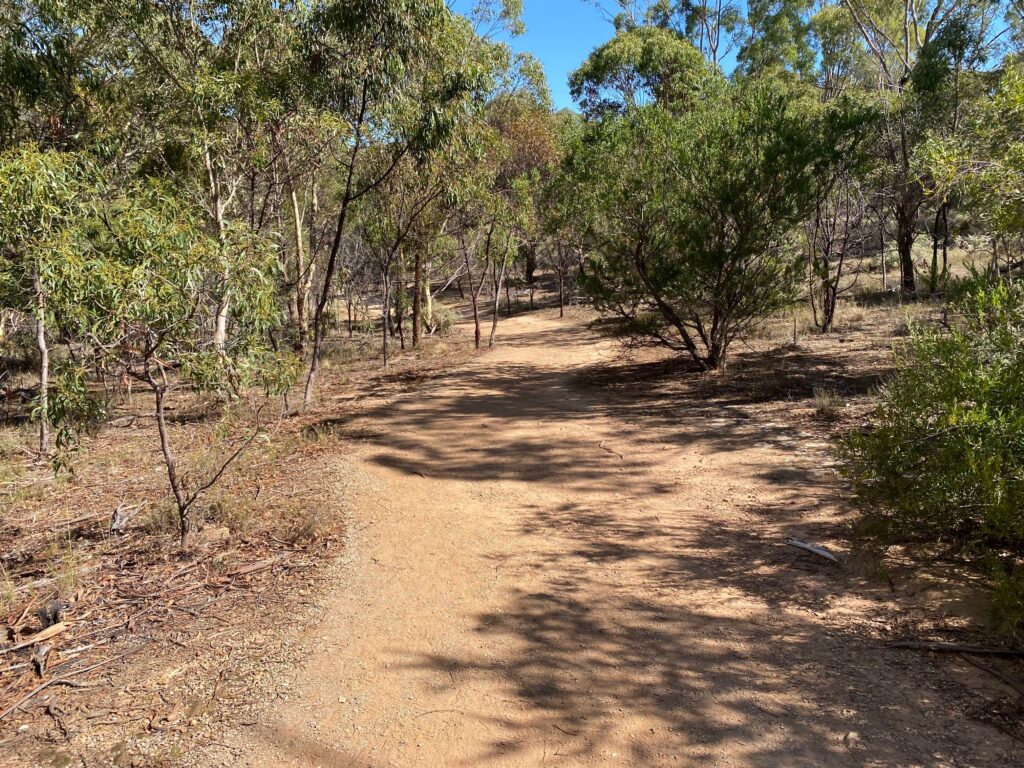
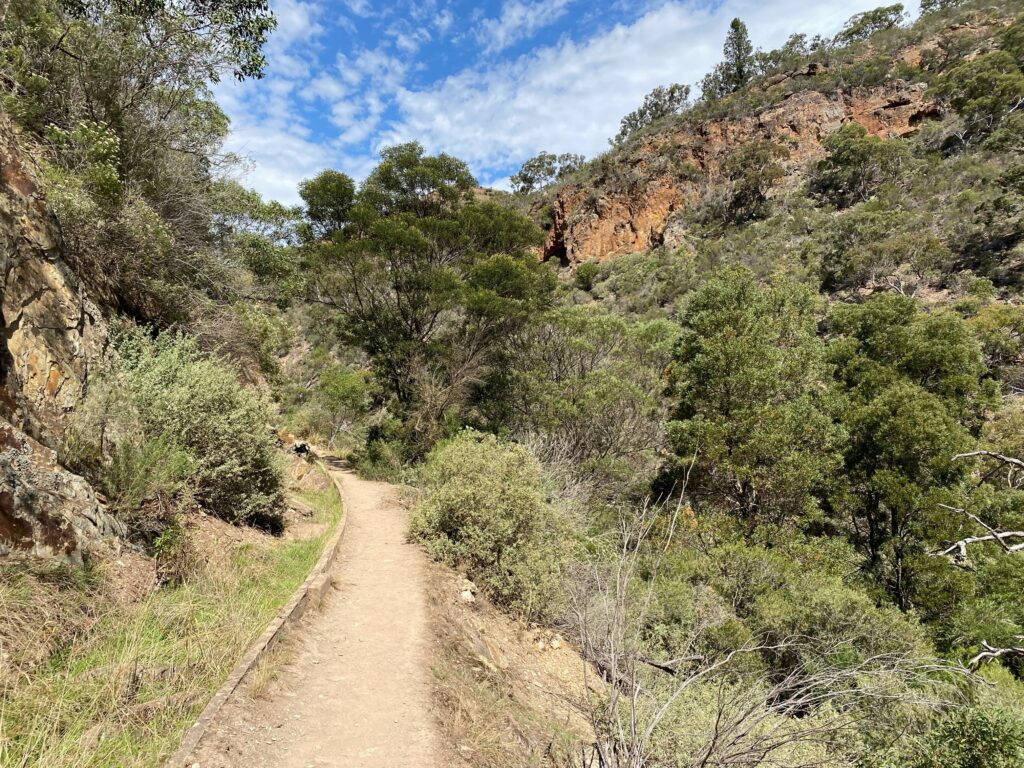
The trail was wide and flat in the beginning.
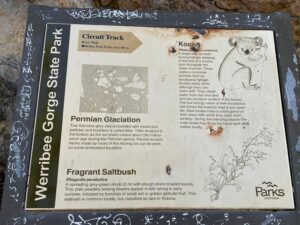
Trail
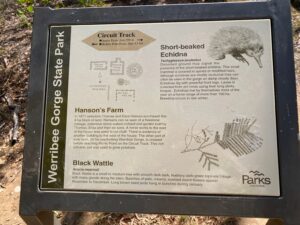
We saw the first information sign soon:
Short-beaked Echidna
Tachyglossus aculeatus Disturbed ground may signal the presence of the short-beaked echidna. This small mammal is covered in spines or modified hairs. Although echidnas are mostly nocturnal they can often be seen in the gorge on damp cloudy days. Echidnas dig with powerful front legs. Lavae is collected from ant nests using their long sticky tongue. Echidnas live by themselves most of the year on a home range of more than 100 ha. Breeding occurs in late winter.
Hanson’s Farm
In 1871 selectors Thomas and Eliza Hanson purchased this 8 ha block of land. Remains can be seen of a freestone cottage, extensive stone walled orchard and garden built by Thomas, Eliza and their six sons. A horse works to the east of the house was used to cut chaff. There is evidence of another building to the west of the house. The other part of their farm, 24 ha overlooking Werribee Gorge, is crossed before reaching Picnic Point on the Circuit Track. This rich volcanic soil was used to grow potatoes.
Black Wattle
Acacia mearnsii Black Wattle is a small to medium tree with smooth dark bark, feathery dark-green bipinate foliage with many glands along the stem. Bunches of pale, creamy, scented round flowers appear November to December. Long brown seed pods hang in bunches during January.
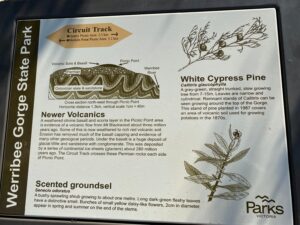
Circuit track
White Cypress Pine
Callitris glaucophylla A grey-green, straight trunked, slow growing tree from 7-15m. Leaves are narrow and cylindrical. Remnant stands of Callitris can be seen growing around the top of the Gorge. This stand of pine planted in 1987 covers an area of volcanic soil used for growing potatoes in the 1870s.
Newer Volcanics
A weathered olivine basalt and scoria layer in the Picnic Point area is evidence of a volcanic flow from Mt Blackwood about three million years ago. Some of this is now weathered to rich red volcanic soil. Erosion has removed much of the basalt capping and evidence of many other geological periods. Under the basalt is a huge deposit of glacial tillite and sandstone with conglomerate. This was deposited by a series of continental ice sheets (glaciers) about 280 million years ago. The Circuit Track crosses these Permian rocks each side of Picnic Point.
Scented groundsel
Senecio odoratus A bushy sprawling shrub growing to about one metre. Long dark-green fleshy leaves have a distinctive smell. Bunches of small yellow daisy-like flowers, 2cm in diameter, appear in spring and summer on the end of the stems.
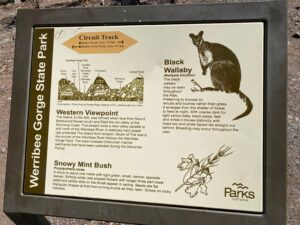
Black Wallaby
Wallabia bicolour The black wallaby may be seen throughout the Park. Preferring to browse on shrubs and bushes rather than grass it emerges from the shelter of forest to feed at night. With coarse dark fur light yellow belly, black paws, feet and wrists it moves distinctly with head low and white tipped tail straight out behind. Breeding may occur throughout the year.
Western Viewpoint
The Island, to the north-west, was formed when lava from Mount Blackwood flowed south and filled the old valley of the Myrniong Creek. The stream wore a new valley parallel to and north of the Werribee River. A relatively hard basalt cap protected The Island from erosion. South of The island the course of the Werribee River follows the Werribee Gorge Fault. The track crosses Ordovician marine sediments that have been upended during the Devonian Period.
Snowy Mint Bush
Prostanthera nivea A shrub to about one metre with light green, small, narrow, opposite leaves. Striking white, bell shaped flowers with longer three part lower petal and yellow dots on the throat appear in spring. Seeds are flat triangular shapes at first then turning purple as they ripen. Grows on rocky hillsides.
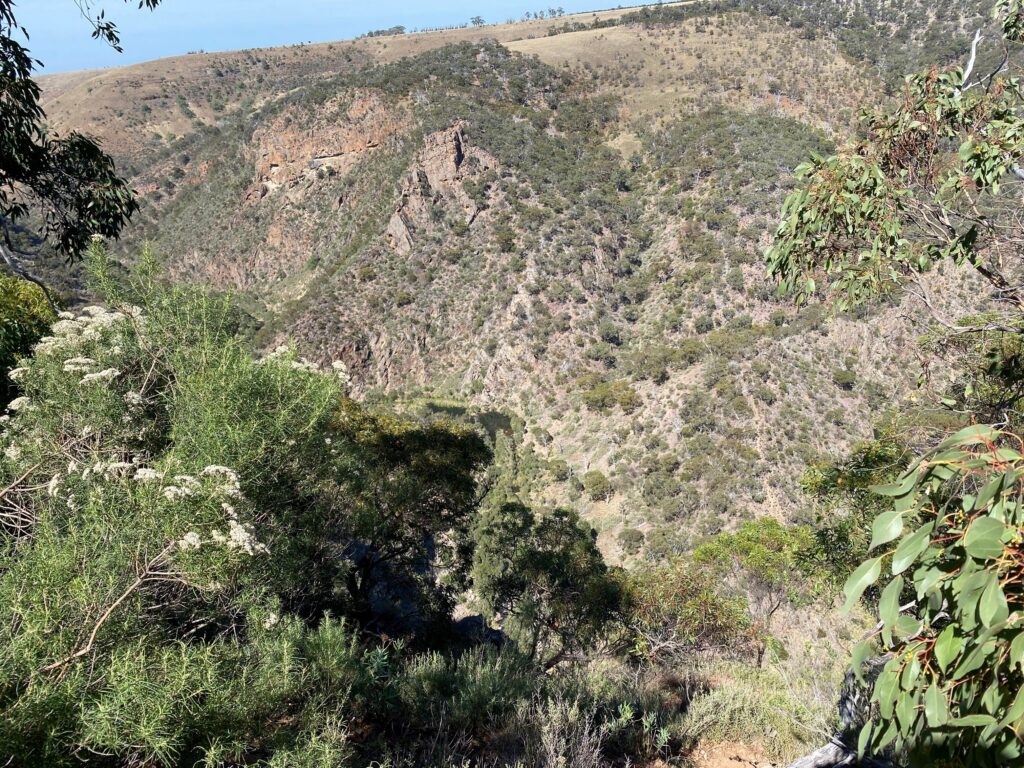
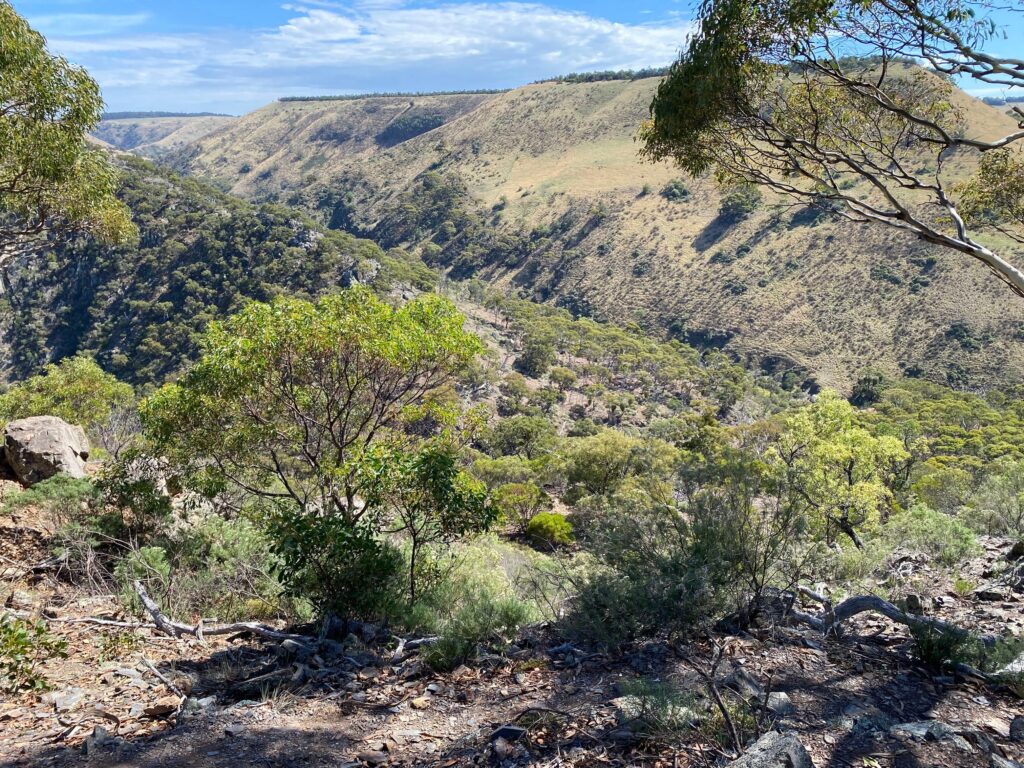
View from Western lookoutAnother view from Western lookout
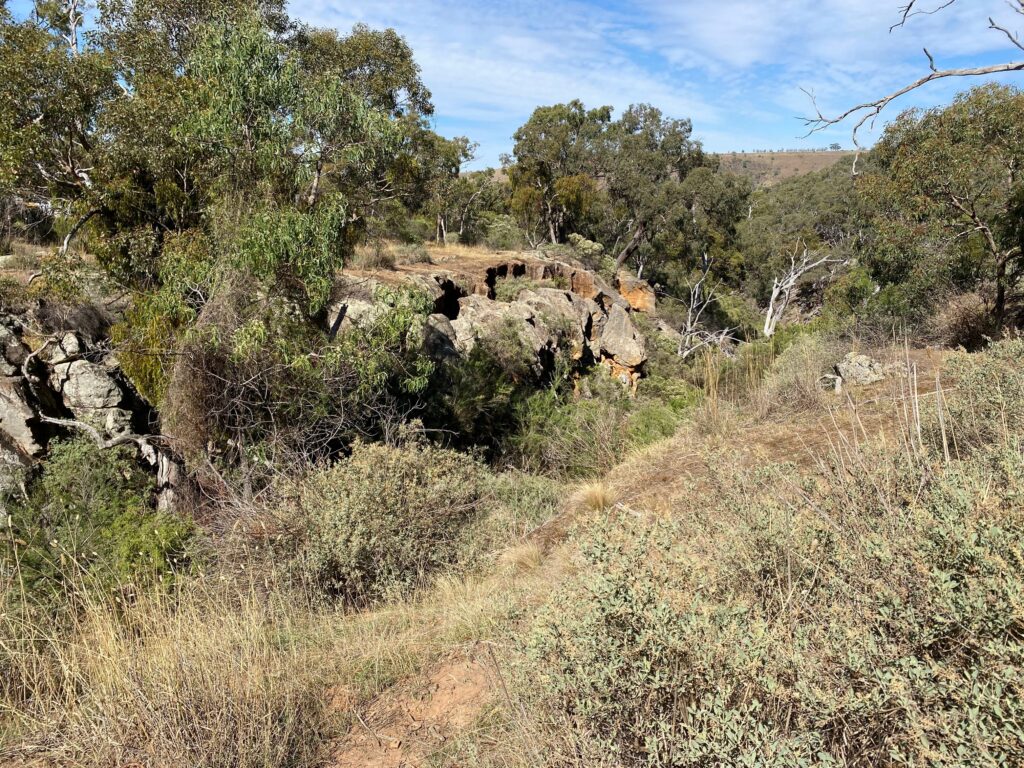
After a relatively short descent we reached the river.
The cable handrail section didn’t cause any problems to us.
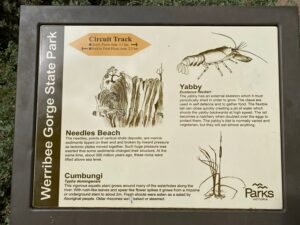
Yabby
Eustacus fleckeri The yabby has an external skeleton which it must periodically shed in order to grow. The claws are used in self defence and to gather food. The flexible tail can close quickly creating a jet of water which shoots the yabby backwards at high speed. The tail becomes a hatchery when doubled over the eggs to protect them. The yabby’s diet is normally varied and vegetarian, but they will eat almost anything.
Needles Beach
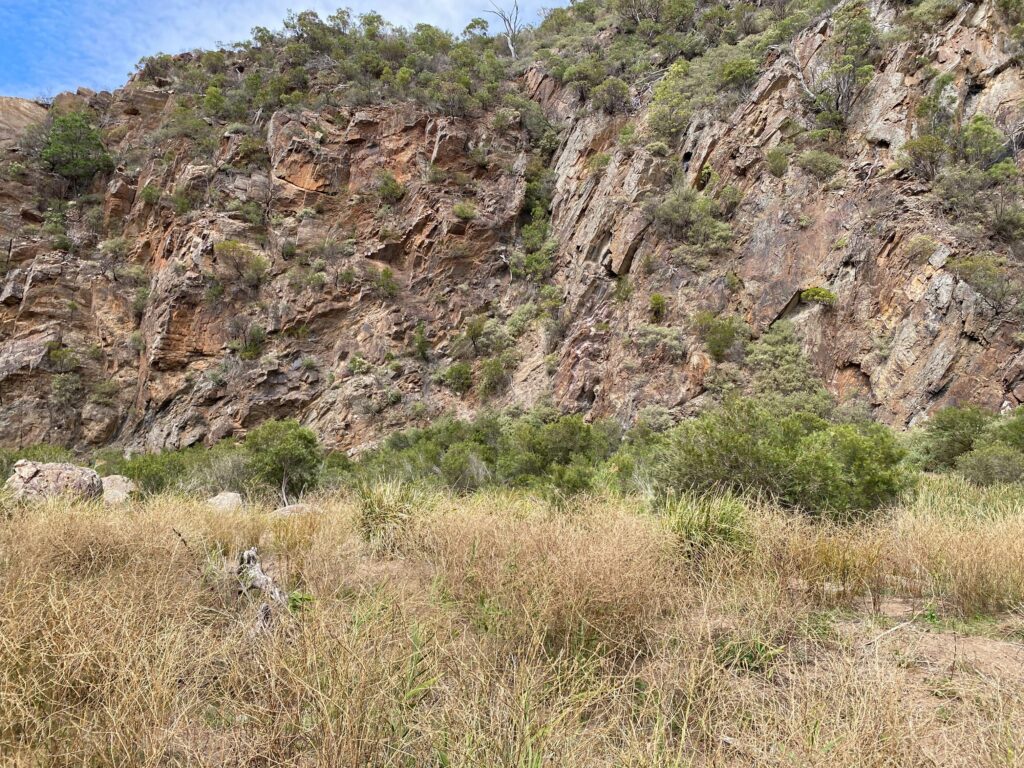
The needles, points of vertical shale deposits, are marine sediments tipped on their end and broken by inward pressure as tectonic plates moved together. Such huge pressure was exerted that some sediments changed their structure. At the same time, about 350 million years ago, these rocks were lifted above sea level.
Cumbungi
Typha domingensis This vigorous aquatic plant grows around many of the waterholes along the river. With rush-like leaves and spear like flower spikes it grows from a rhizome or underground stem to about 2m. Fresh shoots were eaten as a salad by Aboriginal people. Older rhizomes we baked or steamed.
Lion’s Head Beach
Lionhead Beach
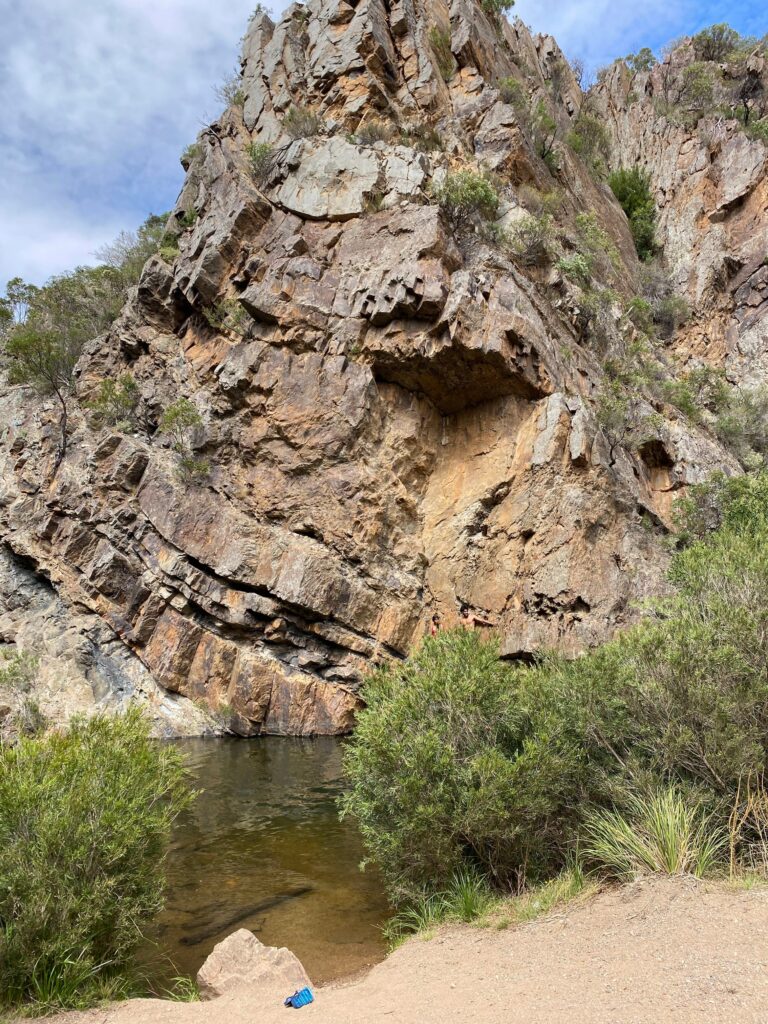
Above the beach and river the Lionhead formation is the dramatic remains of a syncline. About 500 million years ago fine layers of eroded material deposited by marine currents built up in the sea. These horizontal deposits were compressed and during the Middle Devonian period about 380 million years ago, were subjected to tremendous inward pressure by tectonic plate movement. This folded and faulted the layers into the synclines and anticlines found along this cliff. Look for features of a lion’s head on the rockface.
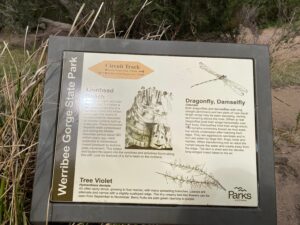
Dragonfly, Damselfly
Odonata Both dragonflies and damselflies with long straight abdomens and two pairs of near equal length wings may be seen swooping, darting and hovering above the river. (When at rest dragonflies hold their wings horizontally over their body. Damselflies hold their wings erect). The nymphs, commonly known as mud-eyes, live wholly underwater after hatching from eggs. They are aggressive cannibals and in turn are eaten by large fish, frogs, birds and reptiles. When transforming into an adult the nymph leaves the water and crawls away from the edge. The skin is shed and the slender, long-winged insect takes to the air.
Tree Violet
Hymenthera dentata An often spiny shrub, growing to four metres, with many spreading branches. Leaves are alternate and narrow with a slightly scalloped edge. The tiny creamy bell-like flowers can be seen from September to November. Berry fruits are pale green ripening to purple.
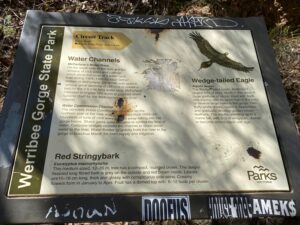
Water Channels
McFarlane’s Water Race On the south side of the river are the remains of rock walls and cuttings which show the route of a water race built during 1904–1906 for local farmer William Η McFarlane. Dynamite was used to remove great sections of cliff face to create a bed for the 2.5 mile long water race. McFarlane intended to irrigate 100 acres to produce dried lucerne chaff for the Melbourne poultry-food market.
Water Commission Channel The concrete Water Commission Channel on the northern side of the river was constructed from 1926–29. Hundreds of tons of rock were blasted away falling into the gorge below. Sluice gates were installed to control the flow of water. Concrete bridges crossed the channel to divert storm water to the river. Water flowed by gravity from the river in the gorge to Bacchus Marsh for town supply and irrigation.
Wedge-tailed Eagle
Aquila audax The Wedge-tailed eagle, Australia’s largest bird of prey, nests in this area. A huge platform of sticks, lined with bark and leaves, can be seen high in the forks of several large trees in the gorge. Two fluffy white chicks, hatch in September and gradually develop golden brown feathers. The adults, standing up to a metre tall, with 2-3 m wingspan, darken to become almost black with age.
Red Stringybark
Eucalyptus macrorhyncha This medium sized, 12–35 m, tree has a compact, rounded crown. The deeply fissured long fibred bark is grey on the outside and red brown inside. Leaves are10-16 cm long, thick and glossy with conspicuous side veins. Creamy flowers form in January to April. Fruit has a domed top with 6-12 buds per cluster.
Koala
Phascolarctos cinereus A koala may be seen during the day sleeping in the fork of a manna gum alongside the water channel. These solitary nocturnal animals feed on eucalyptus foliage. Koalas rarely drink, although they can swim well. They obtain water from rain and dew and the moisture content of the leaves. The low energy value of their eucalyptus diet forces the koala to lead a very quiet life. Male koalas have a scent gland on their chest with which they mark their territory. During the breeding season the male koala may throw his head back and bellow loudly.
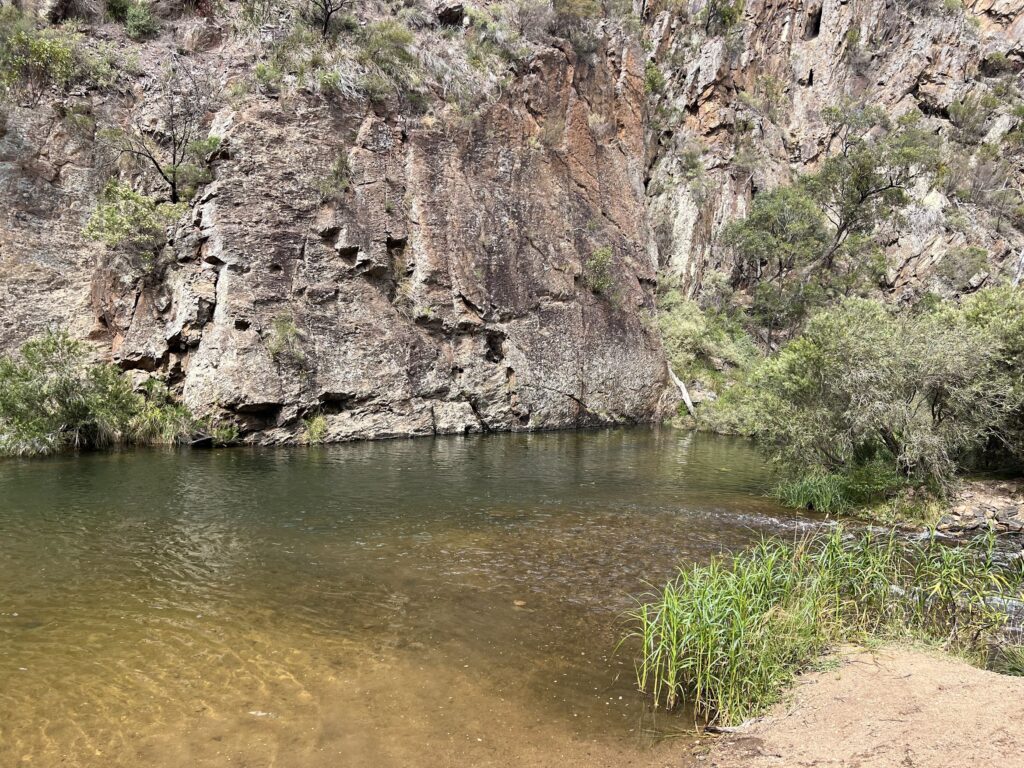
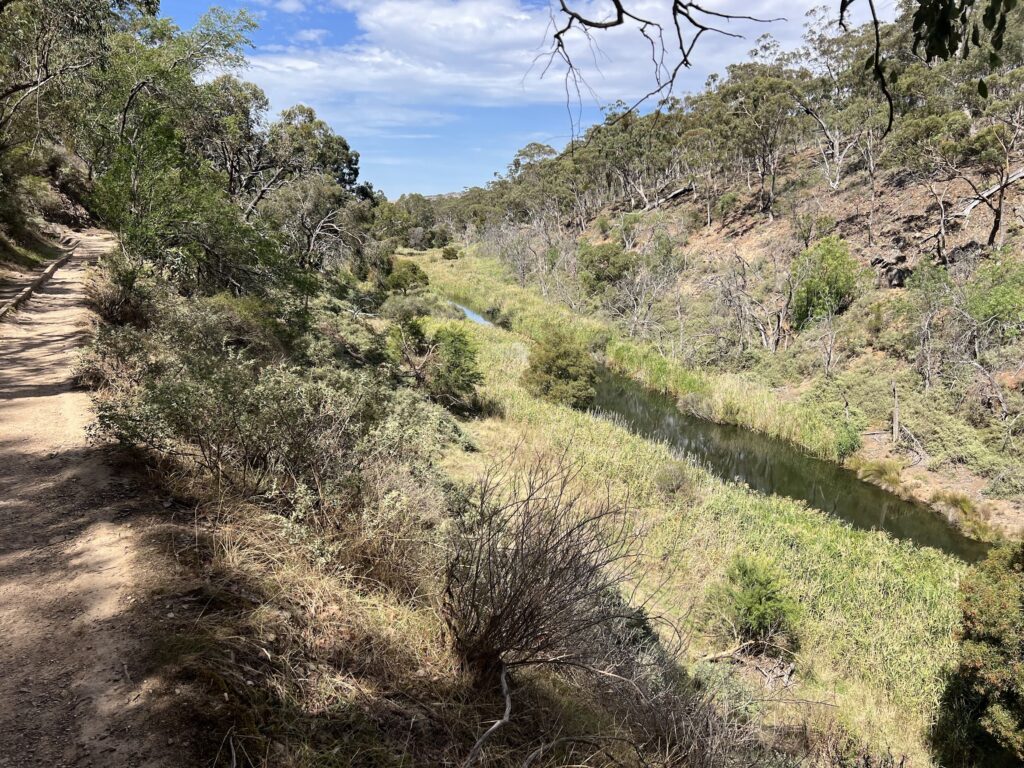
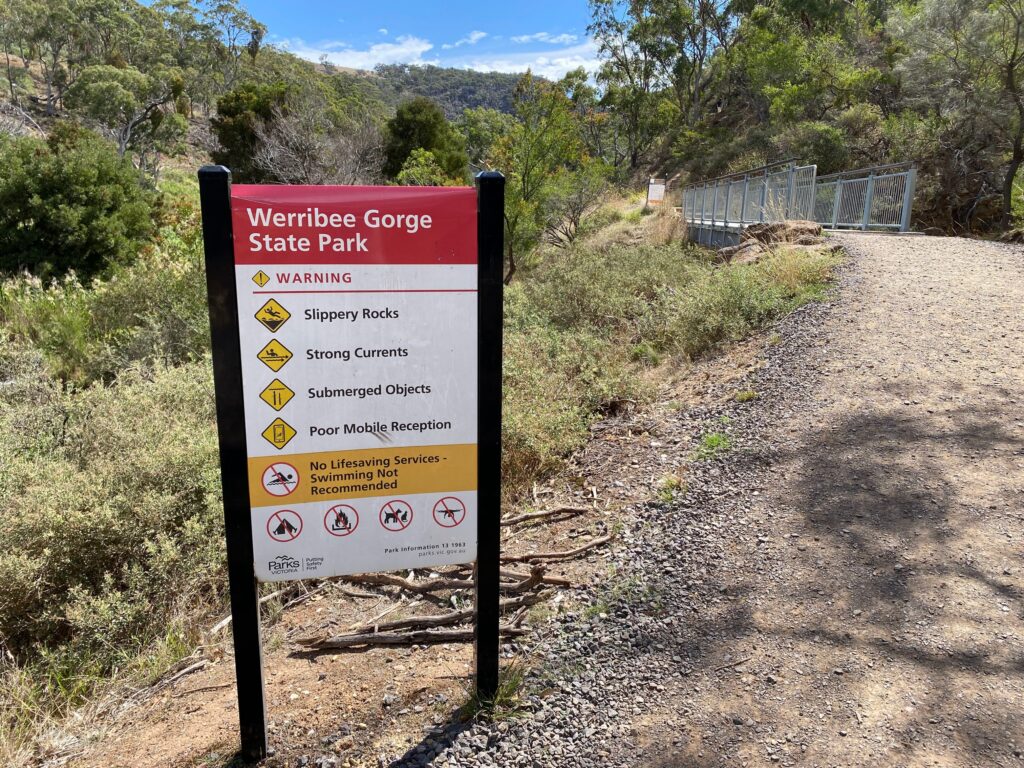
We saw some people swimming despite the sign not recommending it.
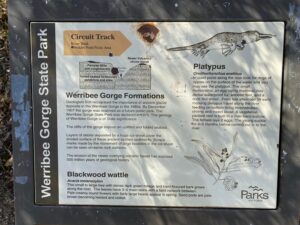
Platypus
Ornithorhynchus anatinus In quiet pools along the river look for rings of ripples on the surface of the water and you may see the platypus. This small monotreme, an egg laying mammal, has dense waterproof fur, webbed feet, and a duck like snout. From late afternoon till early morning platypus travel along the river feeding on bottom living invertebrates, shrimp and insect lavae. A vegetation packed nest is built in a river-bank burrow. The female lays 2 eggs. The young suckle for 4-5 months before coming out in to the river.
Werribee Gorge Formations
Geologists first recognised the importance of ancient glacial deposits in the Werribee Gorge in the 1880s. By December 1907 the gorge was reserved as a future public park. The Werribee Gorge State Park was declared in 1975. The geology of Werribee Gorge is of State significance.
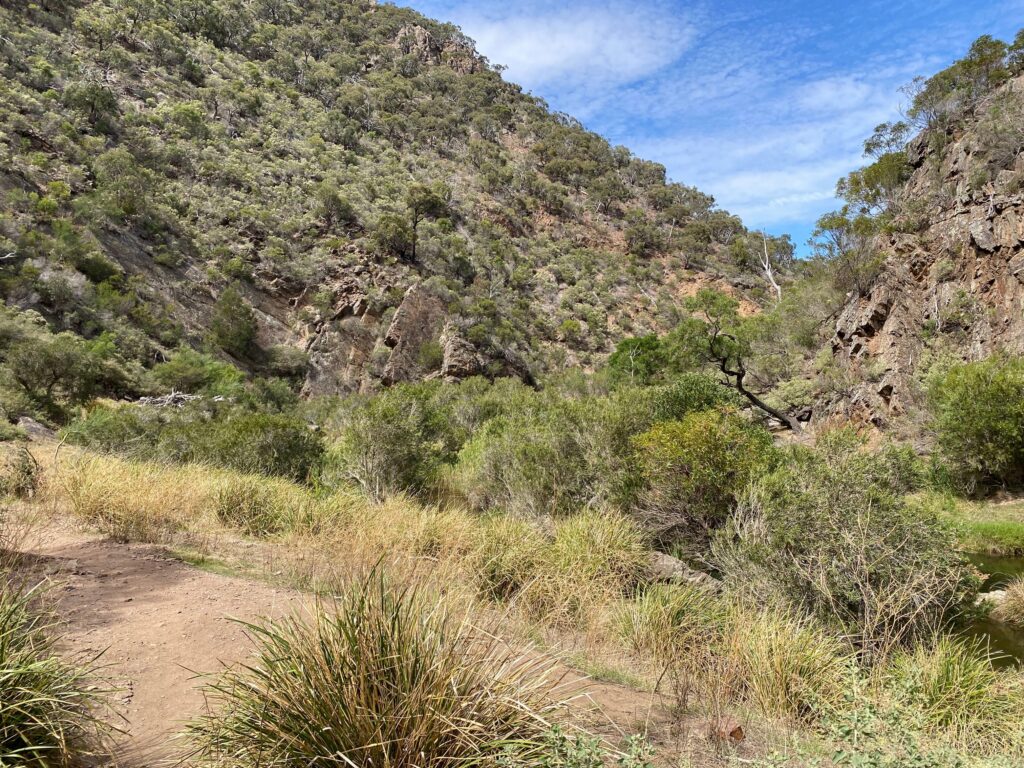
The cliffs of the gorge expose an uplifted and folded seabed.
Layers of debris deposited by a huge ice-sheet cover the eroded surface of these ancient seabed sediments. Scrape marks made by the movement of large boulders in the ice sheet can be seen on some rock surfaces.
The erosion of the newer overlying volcanic basalt has exposed 500 million years of geological history.
Blackwood wattle
Acacia melanoxylon This small to large tree with dense dark green foliage and hard fissured bark grows along the river. The leaves have 3-5 main veins with a faint network between. Pale creamy round flowers with fairly large heads appear in spring. Seed pods are pale brown becoming twisted and coiled.
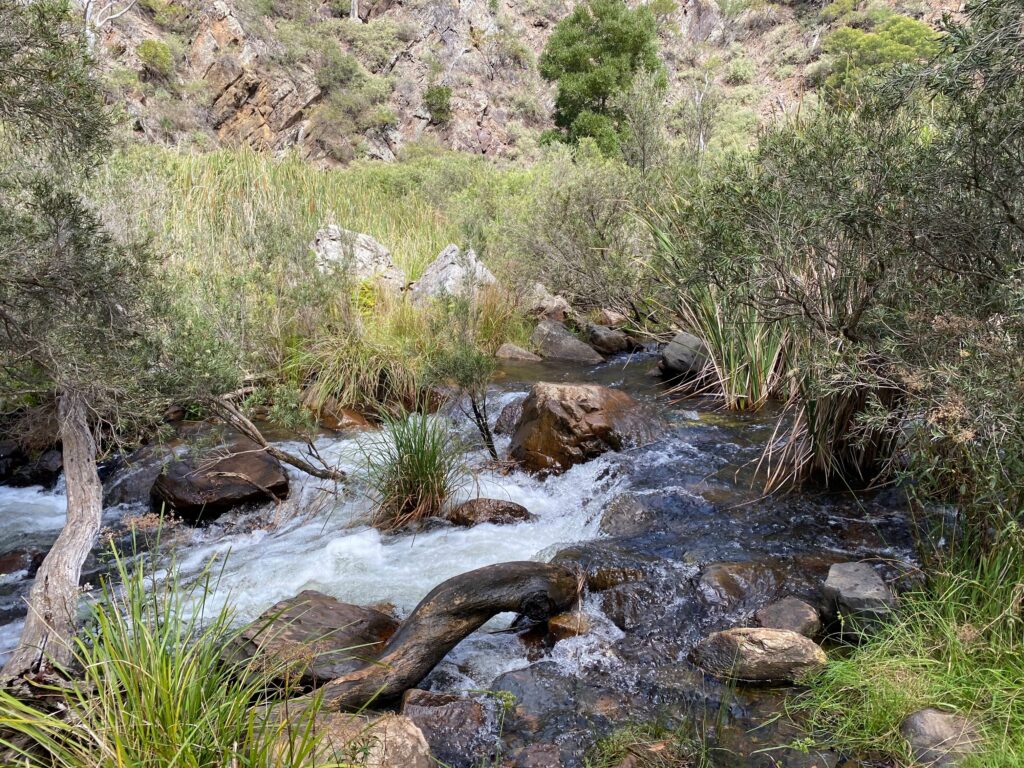
It took us 2 hours and 30 minutes to complete this circuit. It was great. It wasn’t hard for us.
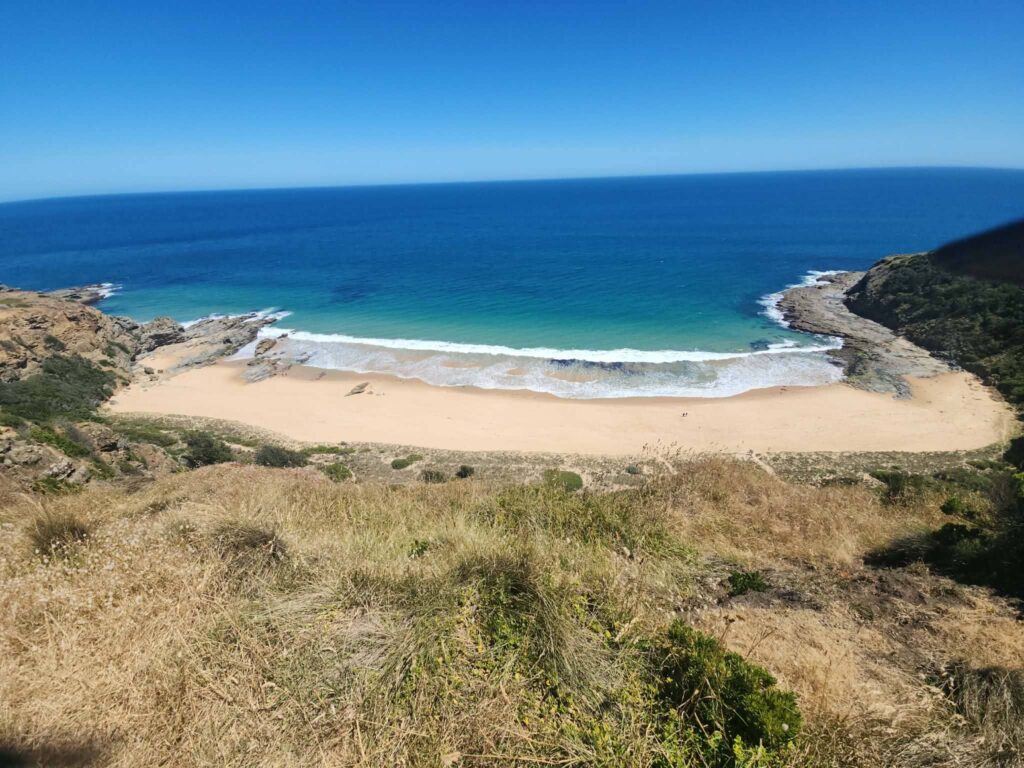
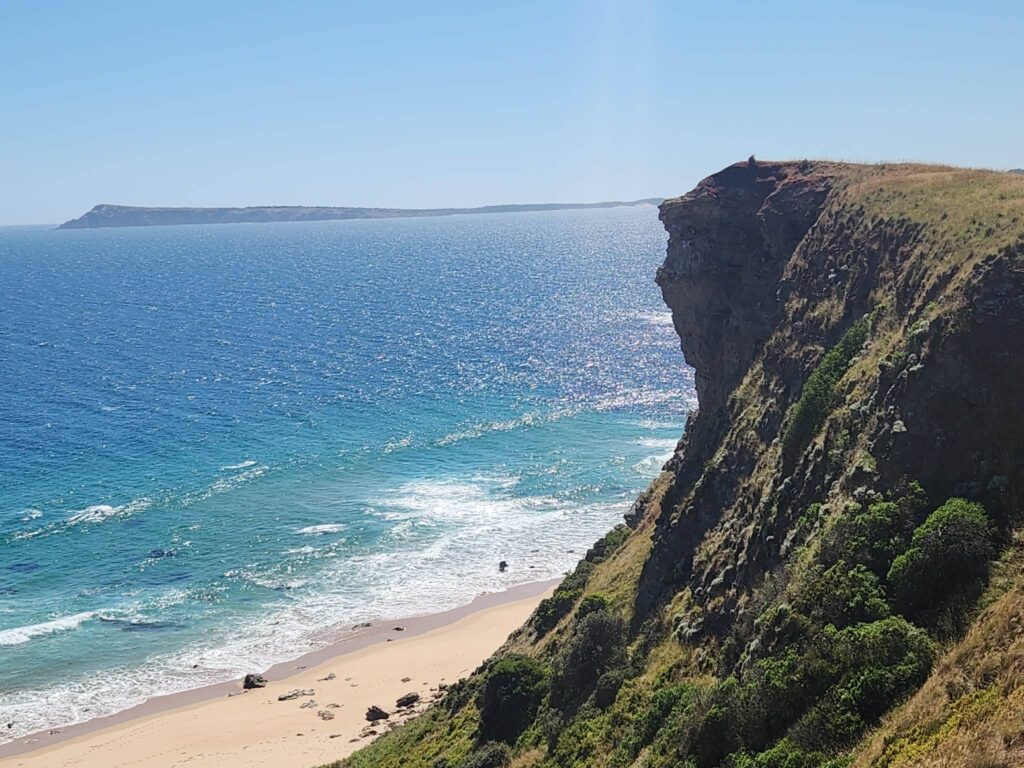
If you’re looking for a wild and rewarding coastal hike that embodies the Australian spirit without straying too far from Melbourne, the Punch Bowl to Kilcunda section of the George Bass Coastal Trail is a perfect choice.
The hike is just under 10 kms one way, depending on the beach detours you take. Trust me, you’ll want to take those detours! Allow up to 3 hours for the hike and all the photo opportunities. Our group tackled it in the peak of summer, leaving cars at both ends for a one way walk. Ending a hike knowing a cold drink awaits on a sunlit deck in Kilcunda is a great motivator.
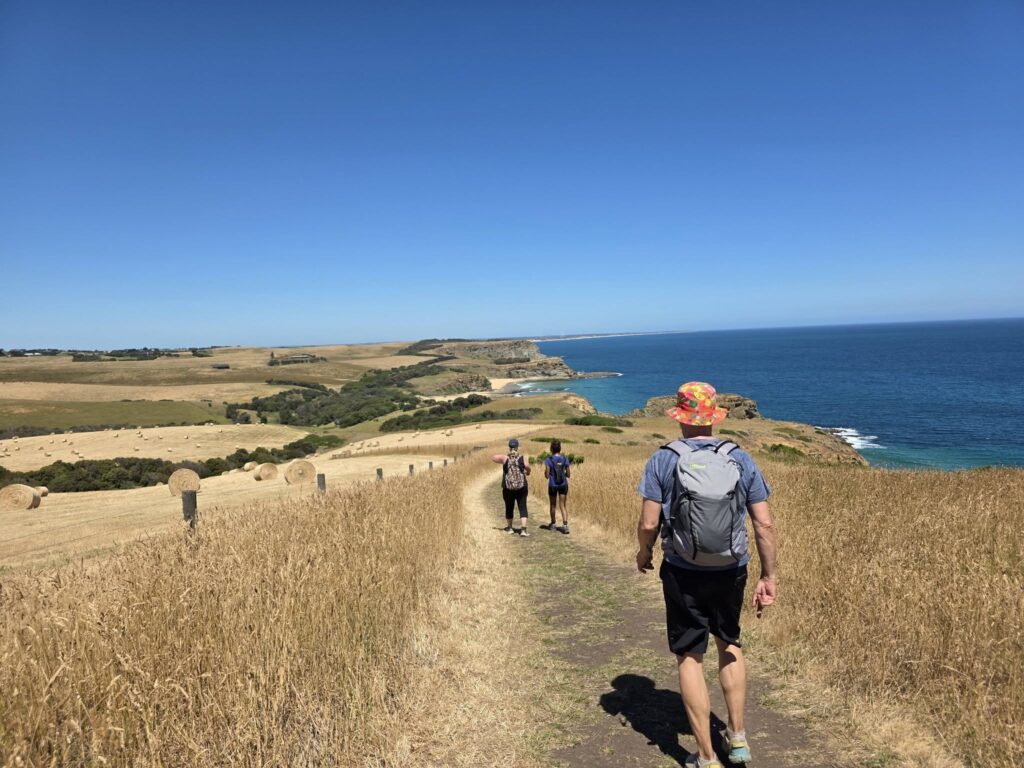
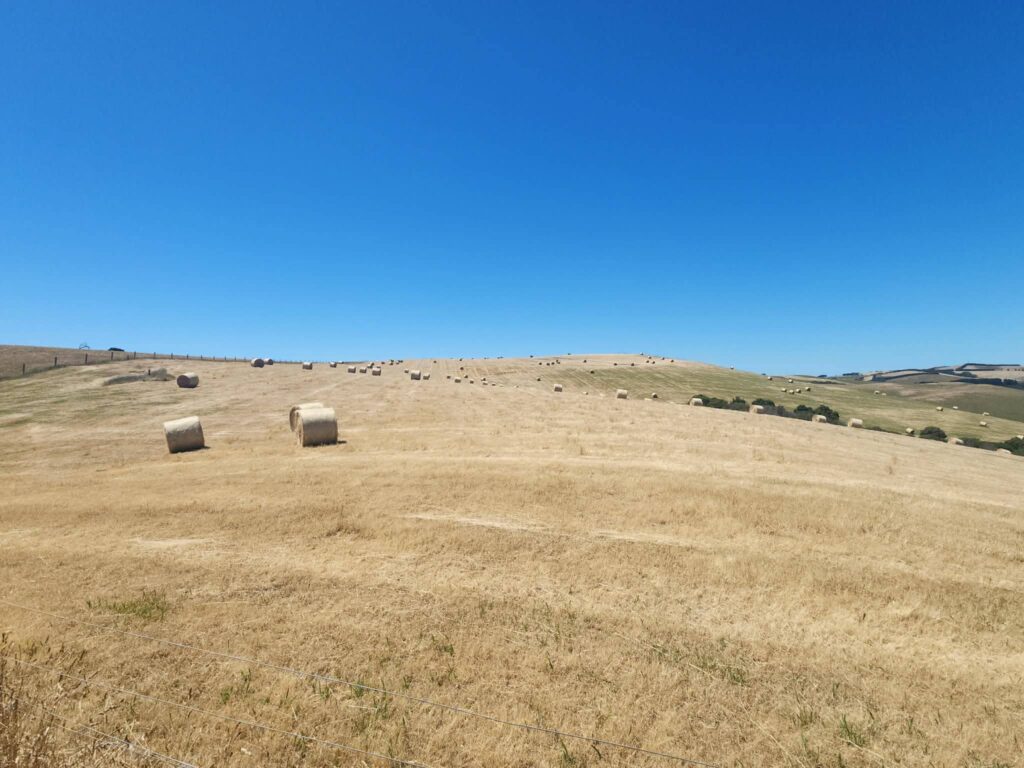
The trail is about two hours southeast of Melbourne’s CBD, making it ideal for a long day trip or a leisurely weekend getaway (plenty of camping and other accommodation options are available). Once you’re out there, it feels completely removed from city life. Picture rugged cliffs, open farmland scattered with hay bales and stretches of coastline that seem untouched.
Our walk began at the end of Punch Bowl Road where the Bass Strait is quite impressive. The cliffs are exposed, and the ocean below is always in motion. As you journey toward Kilcunda, the trail winds through coastal scrub, farmland and cliff top paths. It’s mostly flat, but don’t let that fool you. There are some decent ups and downs, especially if you venture down to the beaches along the way.
Half Moon Bay is a highlight and a must see. Descending onto the sand feels like stumbling upon a hidden part of the coast. The water is clear, the beach is pristine and it’s a great spot for a snack break or a quick dip on a warm day (be careful of rips).
The George Bass Coastal Trail is named after explorer George Bass who sailed this coastline in the late 1700s while mapping parts of Victoria. Kilcunda was once a busy coal mining town in the late 19th century. Remains of the old Kilcunda Coal Mine are still visible nearby adding to the character of a place that feels full of stories.
When it comes to difficulty, this hike is comfortably moderate. You don’t need to be an expert hiker, but a reasonable level of fitness helps, especially in the summer heat. Sturdy shoes are essential since parts of the trail can be uneven or exposed. Bring plenty of water and snacks to keep your energy up. There’s not much shade along the route, so sunscreen and a hat are necessary in the height of summer.
Dogs are welcome on this trail, making it a great option if you want to bring your furry friend along. Just keep them under control and be aware of wildlife.
Reaching Kilcunda at the end feels rewarding in itself. After hours of ocean views and salty sea air, sitting down with a drink and reflecting on the hike is the perfect way to wrap things up. It’s one of those hikes that lingers in your memory, not because it’s extreme, but because it’s simply beautiful and unforgettable.
The weather started getting warm and we went on a hike in Dandenong Ranges (early December).
We started from 1000 Steps car park. Apparently many people had the same idea and finding a parking spot was a challenge.
My knee was still a bit sore so we decided to walk on the Lyrebird track instead of Kokoda track.
Lyrebird Track
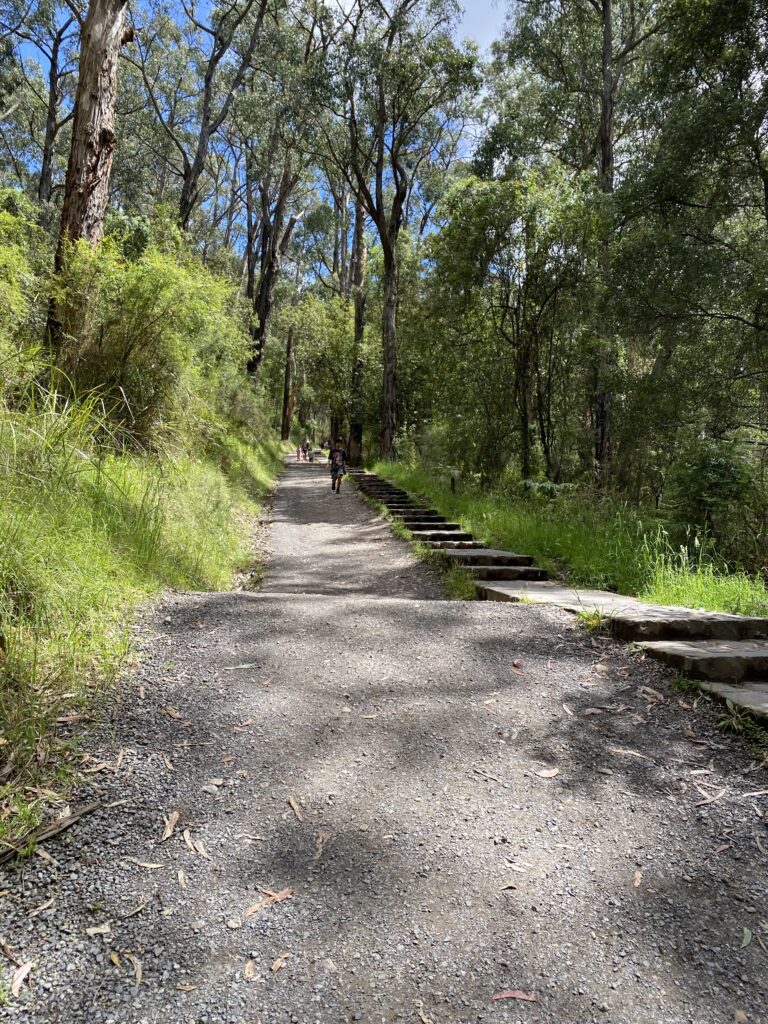
The steps are much lower here.
We heard a bird with a nice call, here’s a recording:
Trail and eucalyptus treesView over eastern Melbourne suburbs
After about half an hour we reached the One Tree Hill.
One Tree Hill
The area is situated on the site of the historic Doongalla Homestead, which was destroyed by a fire in 1932.
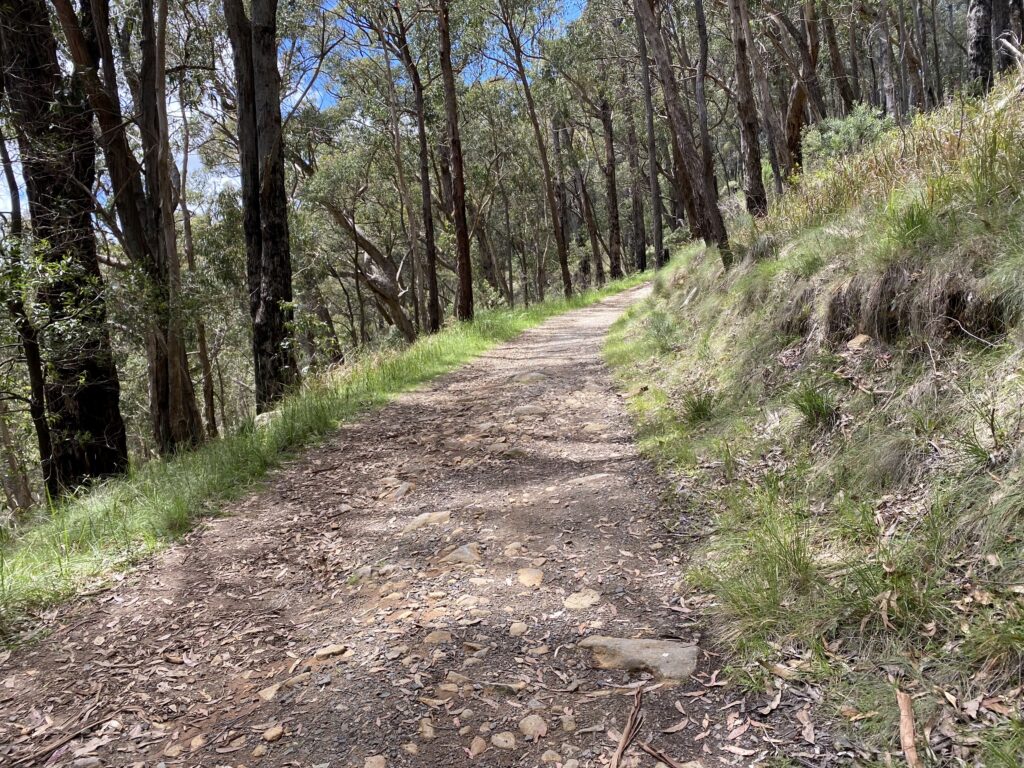
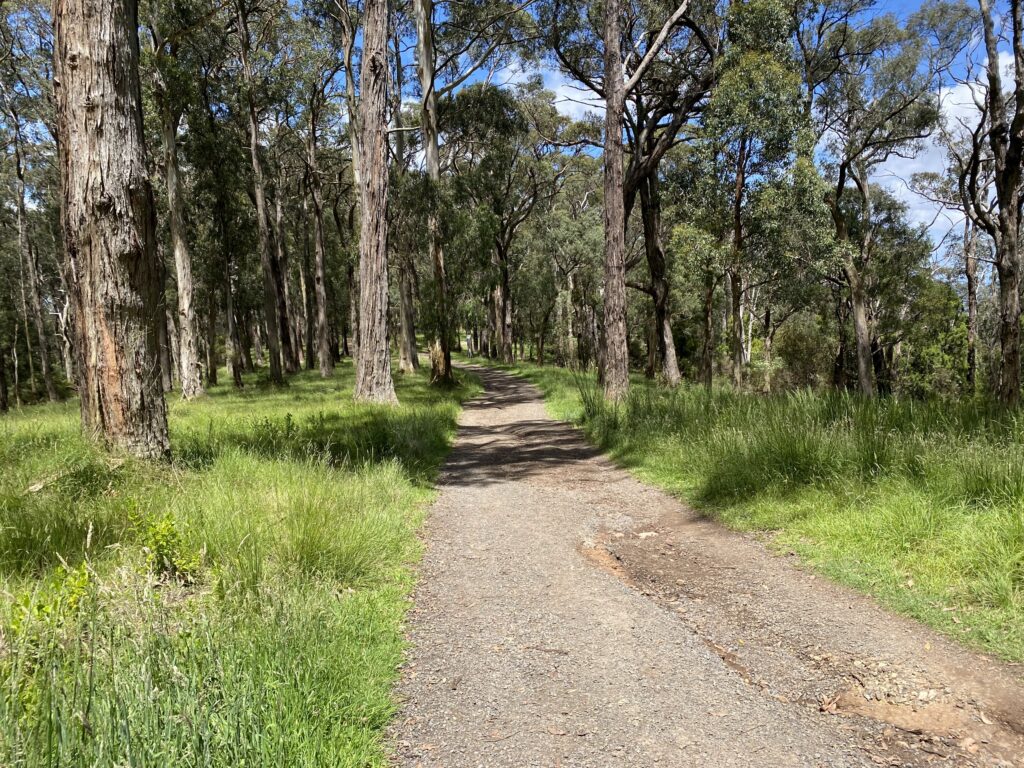
We returned via the Belview Terrace which was nice and wide.
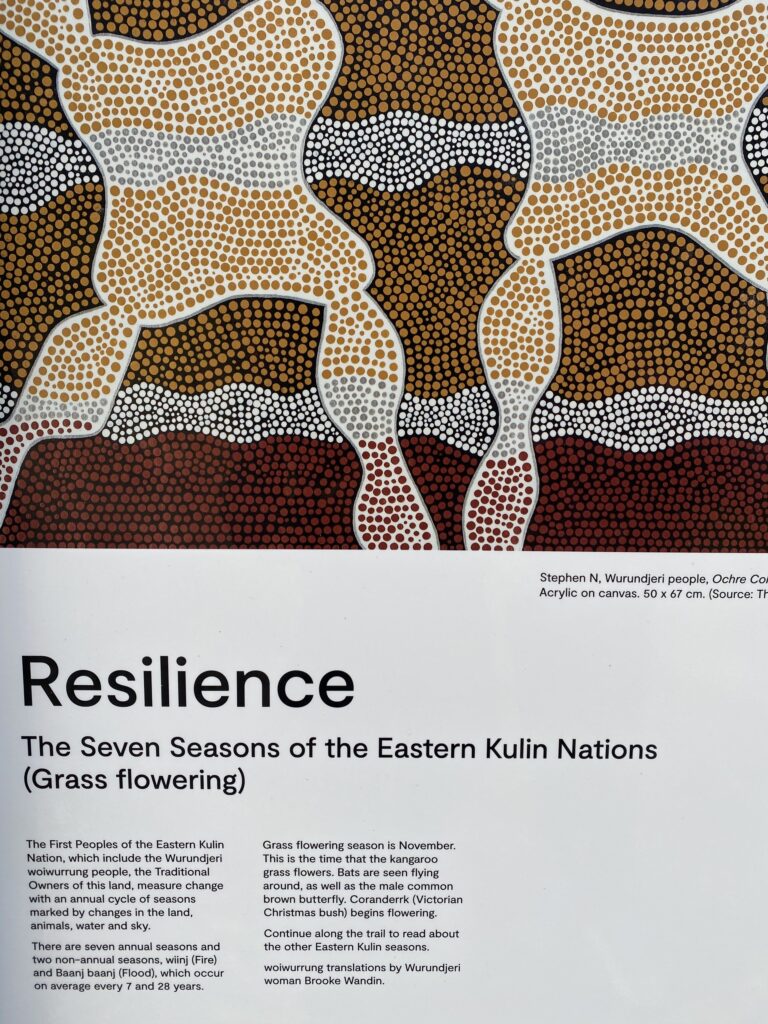
The sign reads:
Resilience The Seven Seasons of the Eastern Kulin Nations (Grass flowering) The First Peoples of the Eastern Kulin Nation, which include the Wurundjeri woiwurrung people, the Traditional Owners of this land, measure change with an annual cycle of seasons marked by changes in the land, animals, water and sky. There are seven annual seasons and two non-annual seasons, wiinj (Fire) and Baanj baanj (Flood), which occur on average every 7 and 28 years. Grass flowering season is November. This is the time that the kangaroo grass flowers. Bats are seen flying around, as well as the male common brown butterfly. Coranderrk (Victorian Christmas bush) begins flowering. Continue along the trail to read about the other Eastern Kulin seasons.
We finished our walk with a lunch at the 1000 Steps Cafe.
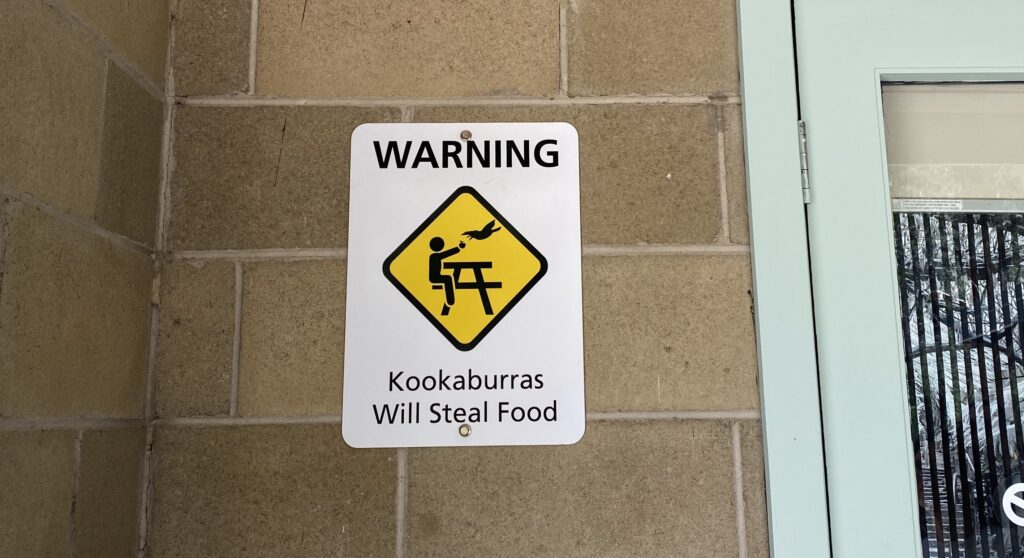
Sign reads: Kookaburras will steal food. The warning was true: at some point a kookaburra suddenly flew to our table. It took us by complete surprise. Before we could do anything, it grabbed a potato chip and flew away.
Overall it was a nice hike. Going uphill was hard but not too challenging. We walked 7 km total – it took us about 1 hour and 50 minutes.
We went on a short walk with our friends last Sunday. Gardiners Creek is located in Melbourne eastern suburbs. It was originally known by its Woiwurrung name Kooyongkoot, meaning “haunt of the waterfowl,” because it was once a favourite gathering place for water birds along the Yarra catchment.
We started from the car park next to the Bennettswood Bowling Club.
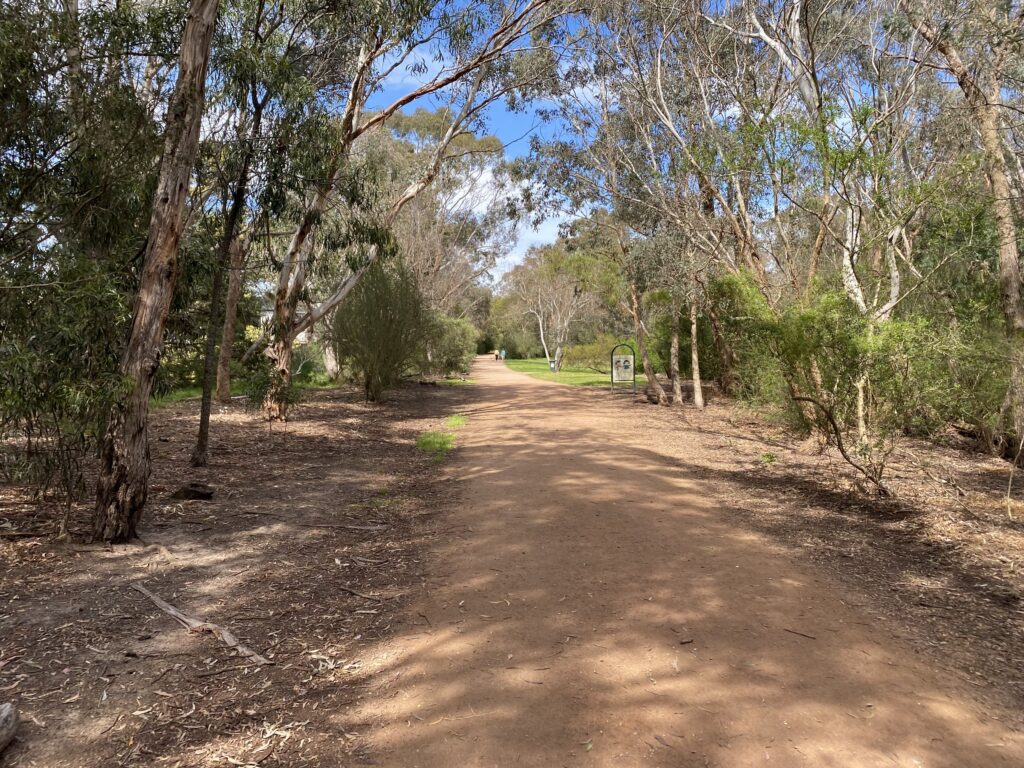
Trail
The trail was nice and flat.
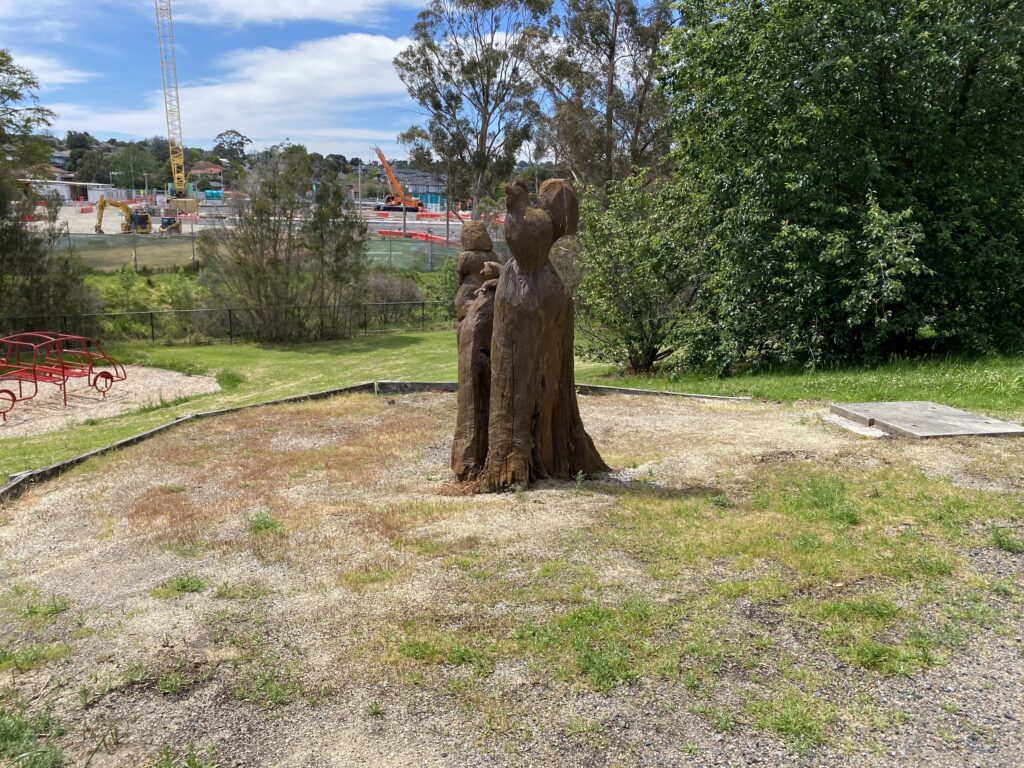
Wooden sculpture of a rooster. You can see new train station being built in the background.Geological sculpture
The stacked blocks are different rock types. The labels are ERUPT, LITHIFY, METAMORPHOSE, MELT – the main processes rocks go through as they change from igneous to sedimentary to metamorphic and back again.
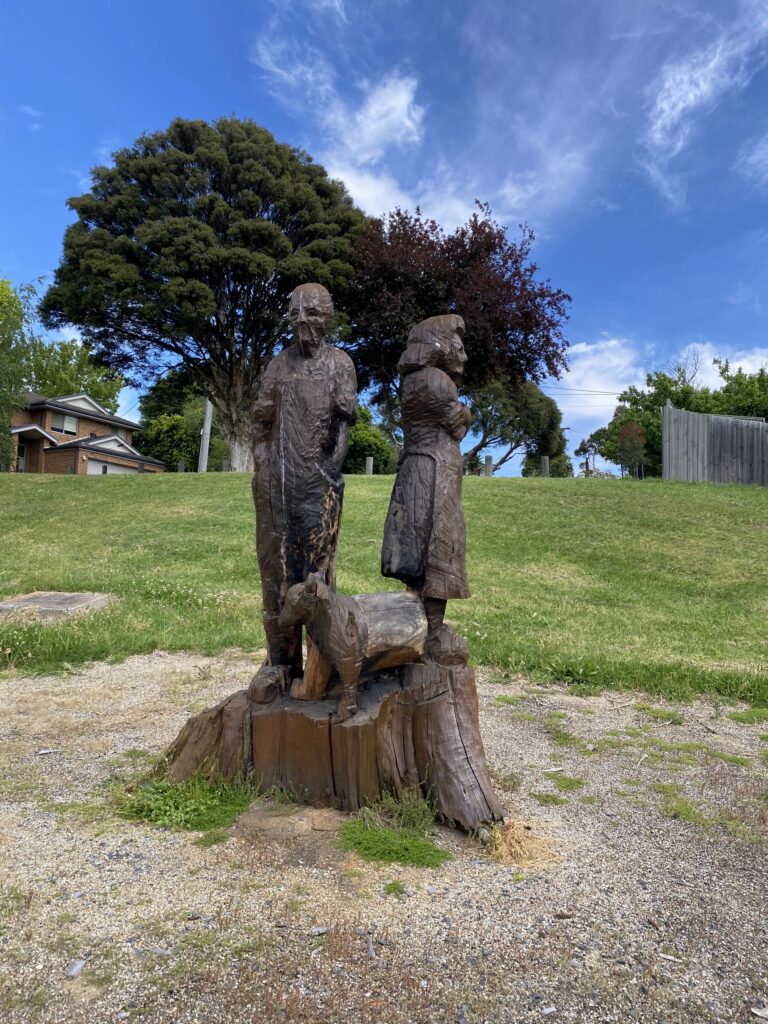
Another wooden sculpture
We reached High St Road in Ashwood and turned back. We returned on the other side of the creek. We walked 8 km total.
On the final day of our stay in Grampians we decided to visit the Hollow Mountain, also known as Wudjub-guyan. We checked out from the YHA lodge in Halls Gap in the morning. We drove on sealed roads but our friends took gravel Mt Zero road and arrived much faster.
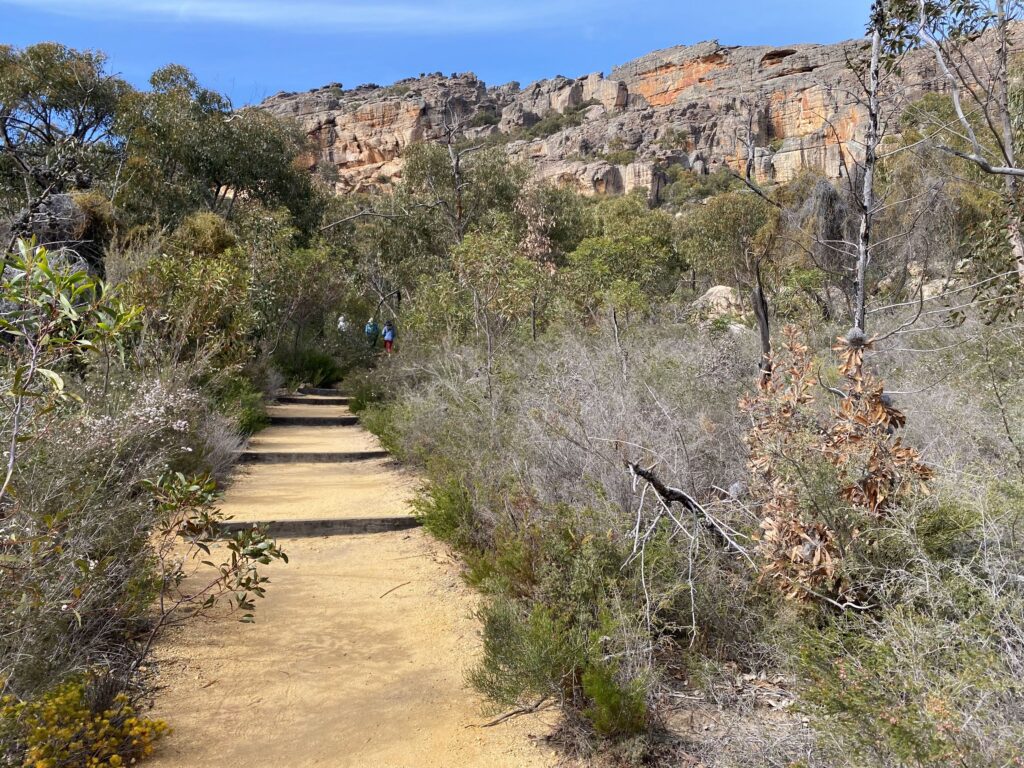
The trail from car park was wide and easy.
Trail from car park
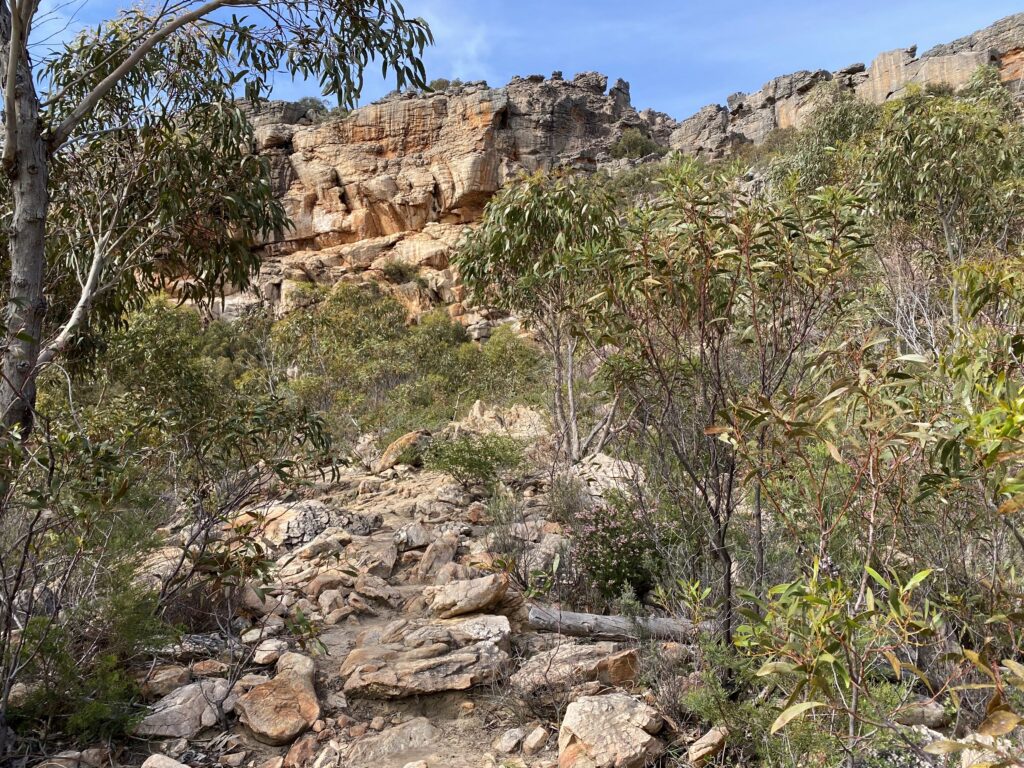
Then an ascend on the rocks began.
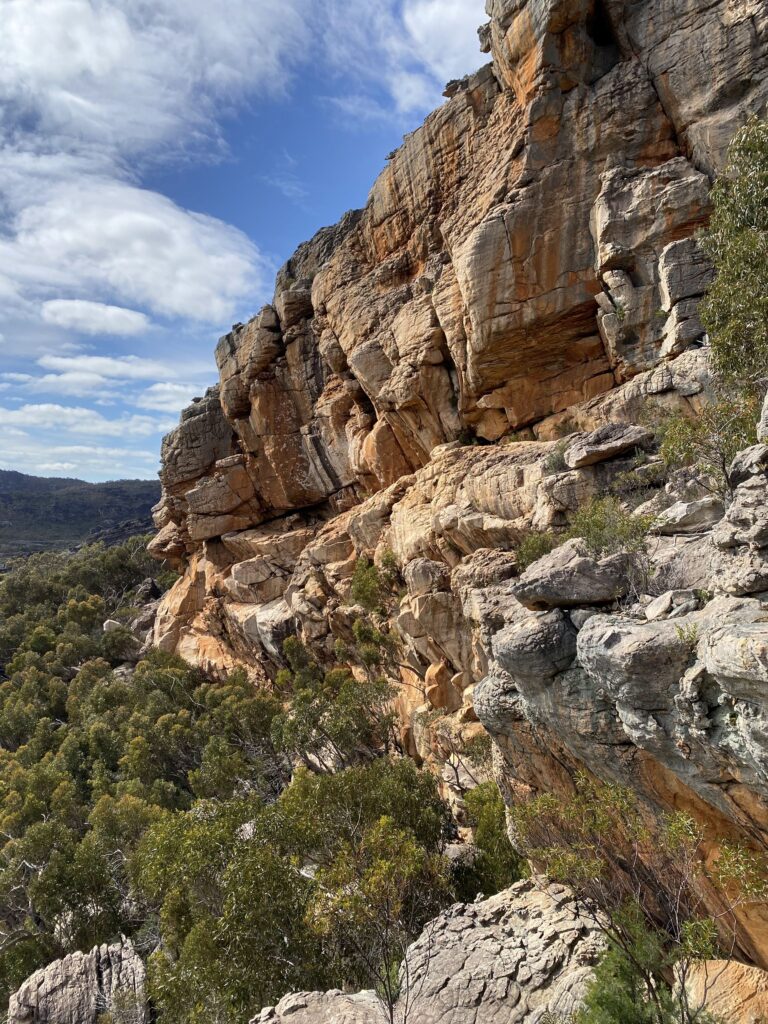
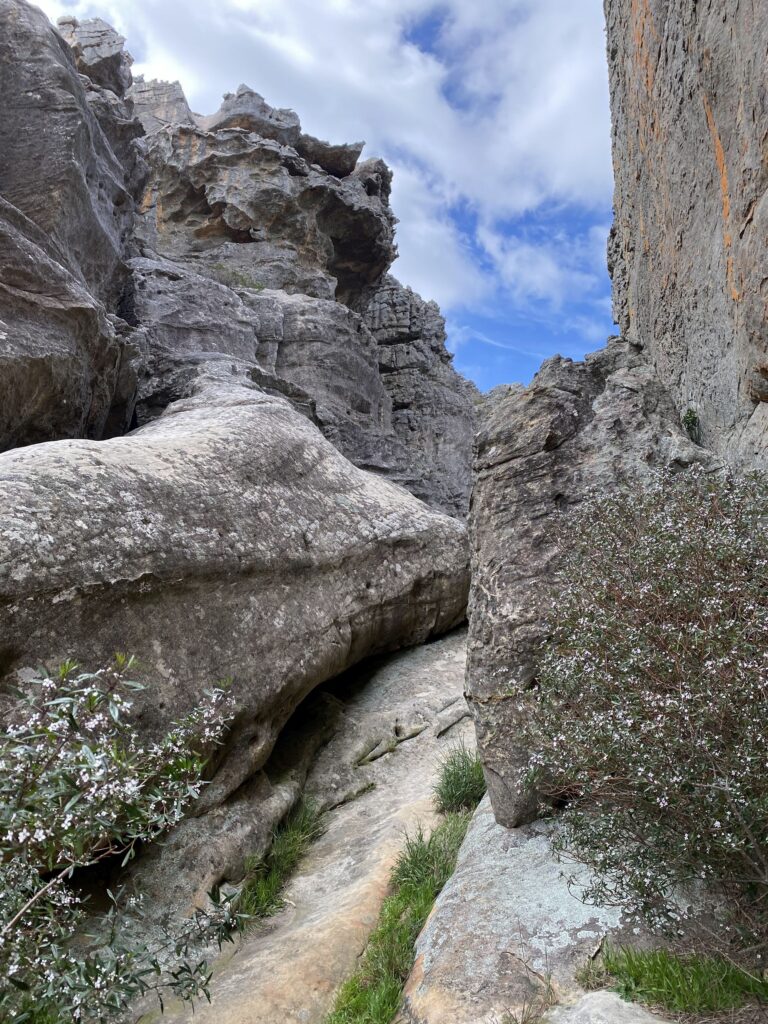
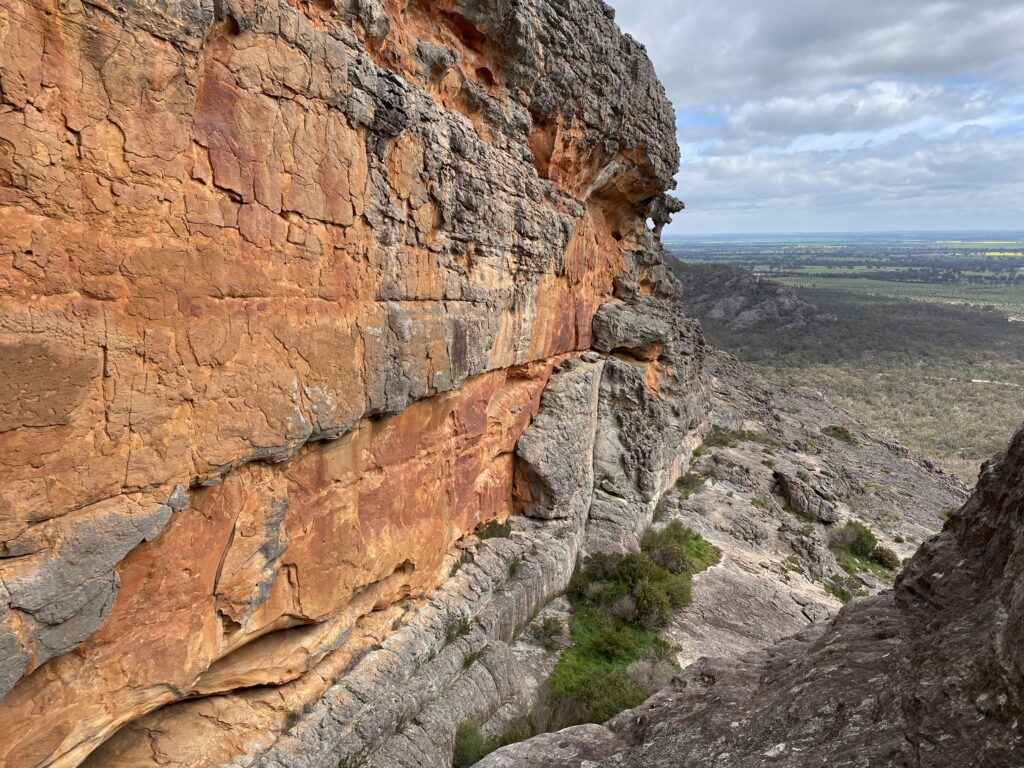
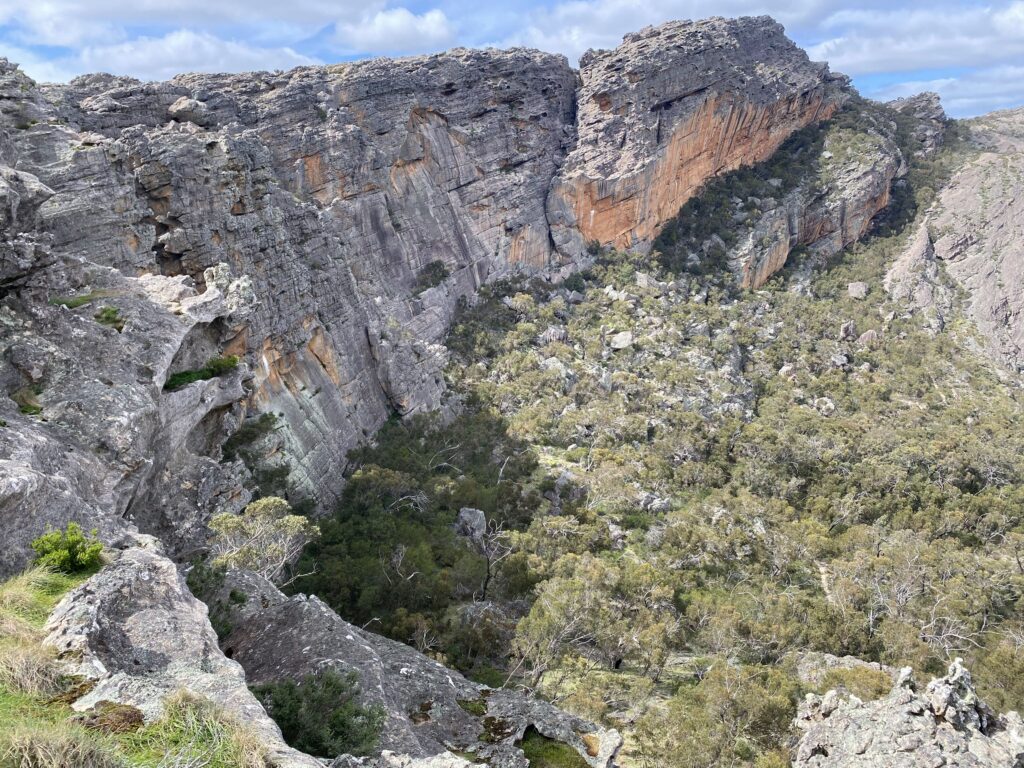
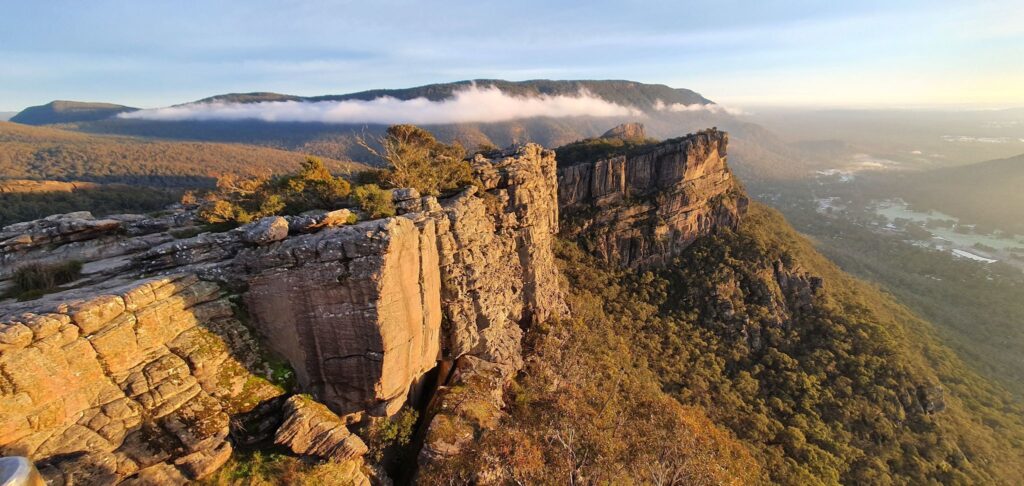
Path forwardView on the valleyRock wallImpressive cliff
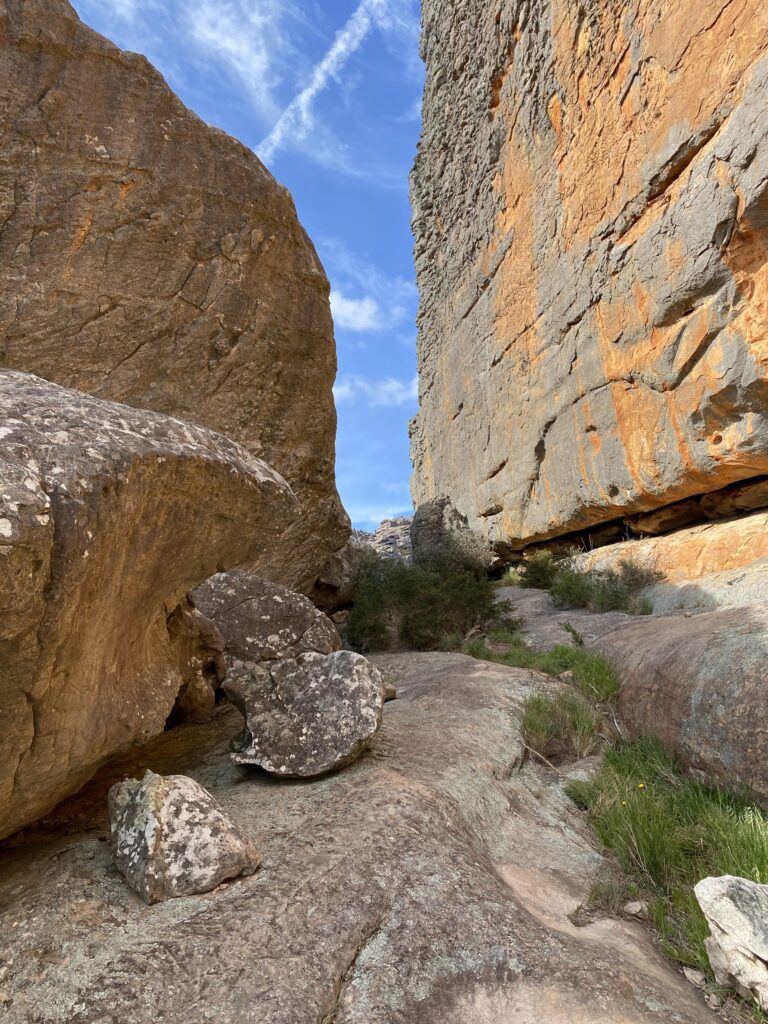
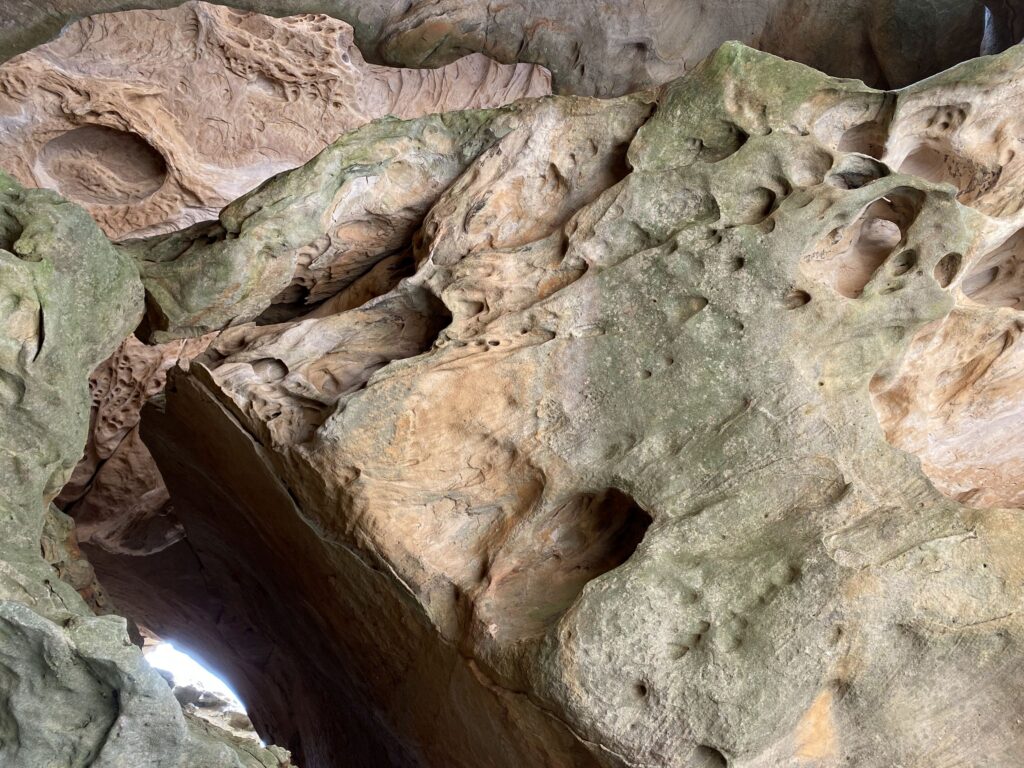
There were some caves about half-way to the summit. Children loved exploring and climbing here.
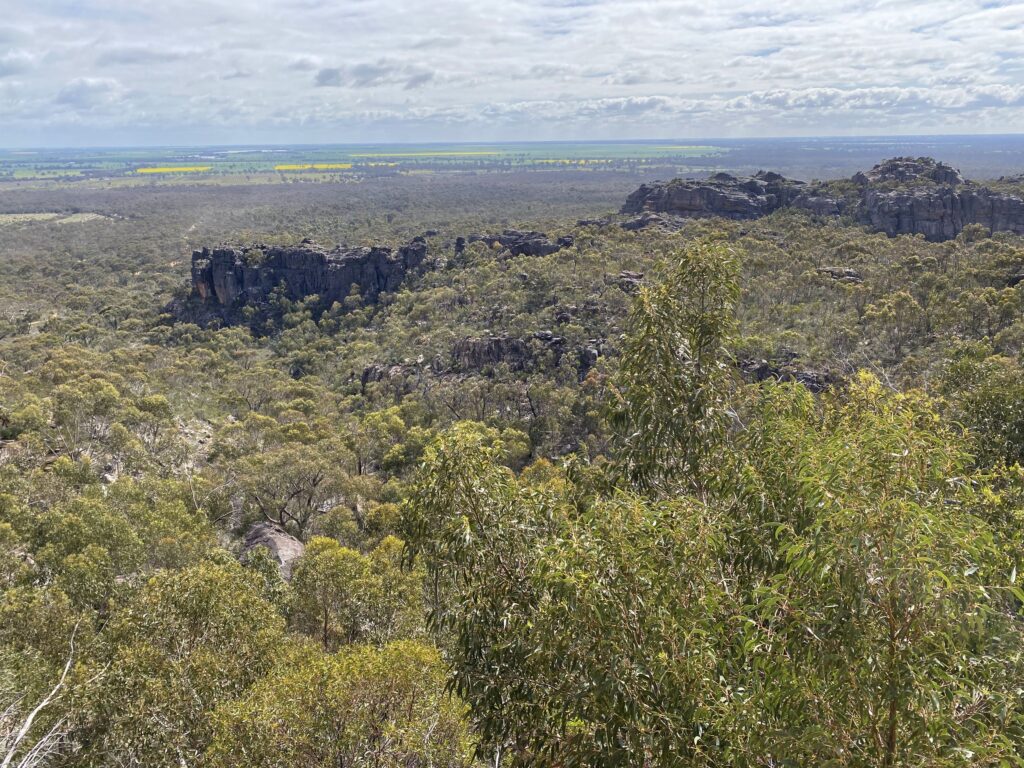
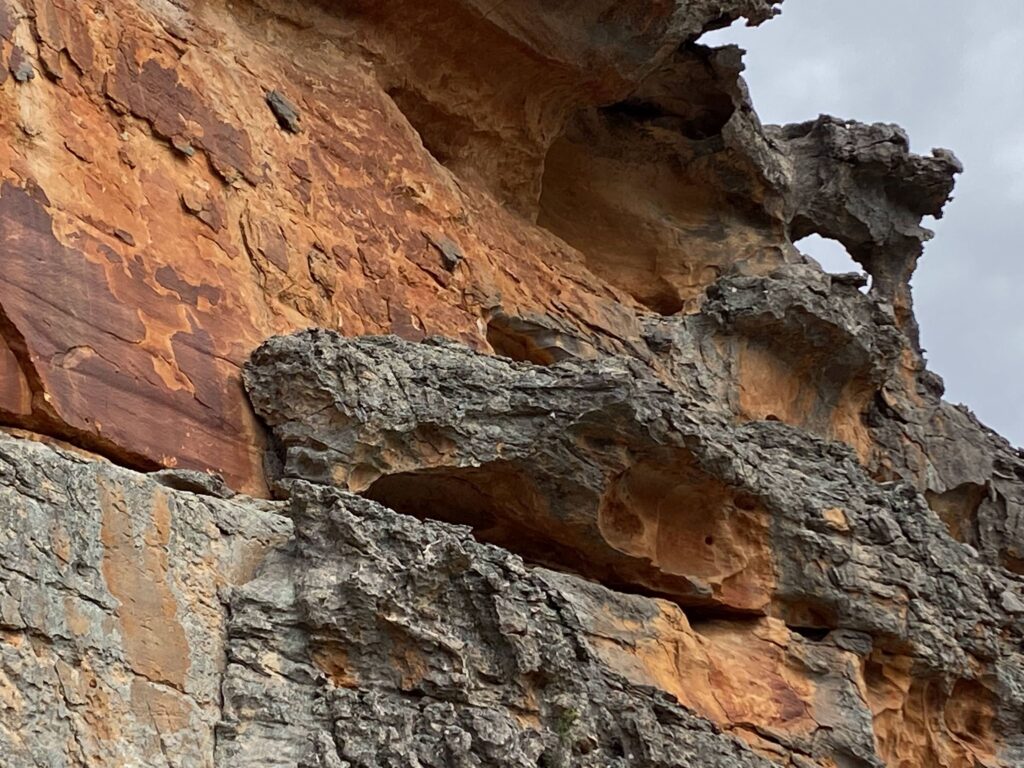
Impressive wallUnusual rock formations carved by wind and rainView from the summit
It took us 2 hours and 20 minutes to complete this walk but we spend a lot of time exploring the caves. Moving time was 1 and half hour according to Strava.
Overall, it’s a great walk, especially if you want to break away from the crowds.
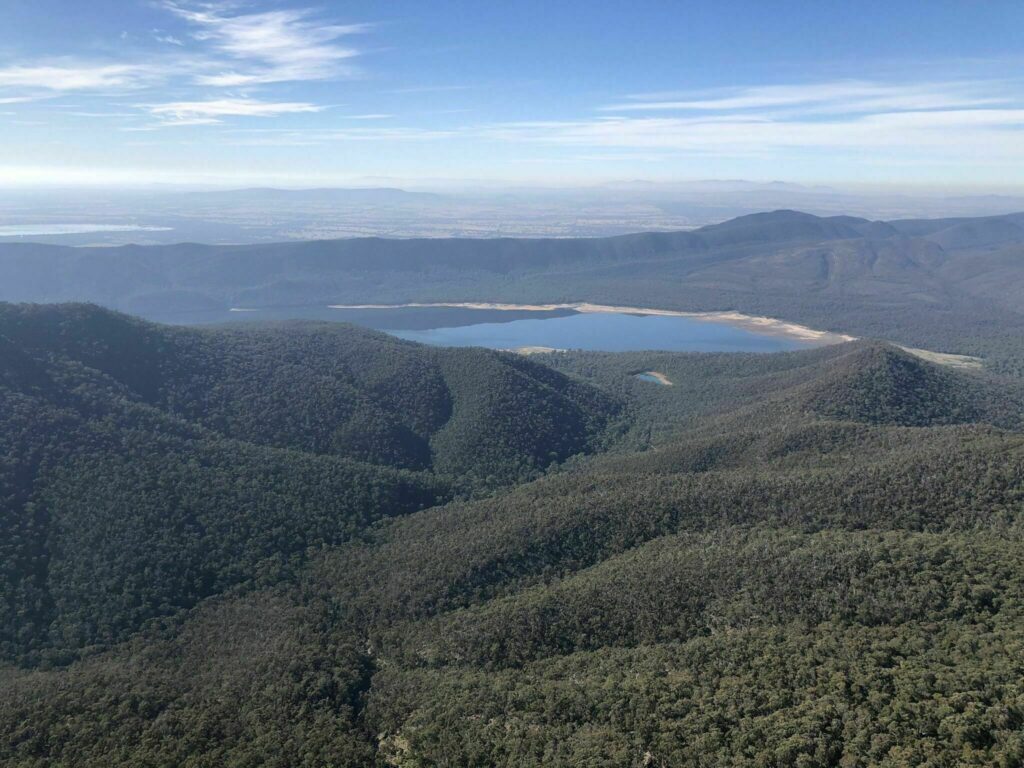
Grampians National Park, also known as Gariwerd, is all about big rock and wide sky. This guide brings together seven standout walks so you can match a track to your fitness and time. Some stay easy near town while others climb over rough sandstone to high lookouts. Each walk includes clear notes on terrain and effort to help you choose quickly. Pack water with a hat and sturdy shoes then set out to enjoy the best walks in the Grampians.
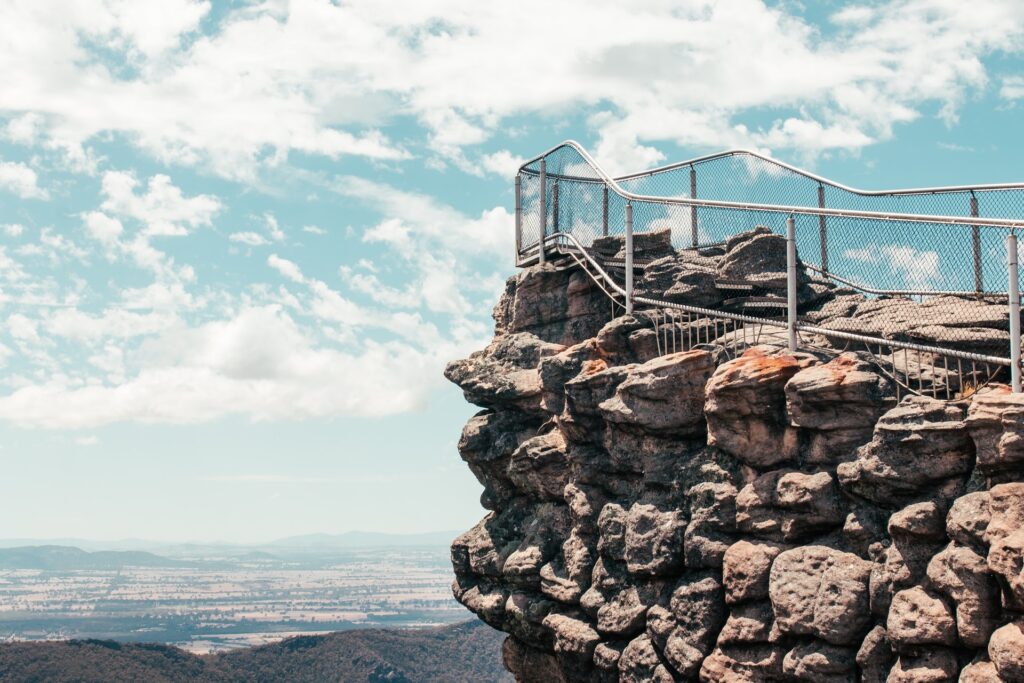
This walk starts in Halls Gap and goes past waterfalls, rocky gullies and the Grand Canyon before climbing up to the Pinnacle lookout. The track is rough in spots with some scrambling, steep steps and uneven ground that can be slippery when wet, so good shoes are important. You’ll pass through bush, creeks and big rock formations. The climb can feel hard at times but most people can manage it. The views over Halls Gap at the top are worth the effort. It’s best to go early in the morning if you want some quiet time on the trail.
Start at the Wonderland carpark and follow a clear path into a rocky gorge with cool slot canyons. There are rock steps and a couple of easy scrambles so good shoes help. The climb is steady with a few steep bursts that get the legs working but most people with moderate fitness will be fine plus older kids who enjoy a bit of clambering. Views open up along the way then the final lookout spreads the range and valley in front of you which feels like a big reward. Summer gets busy so go early or pick winter for quieter tracks and softer light. After rain the rock can be slippery so take it slow in the canyon sections and carry a wind layer for the top. Plenty of spots to pause for photos through the gorge although the last platform is the one you will remember.
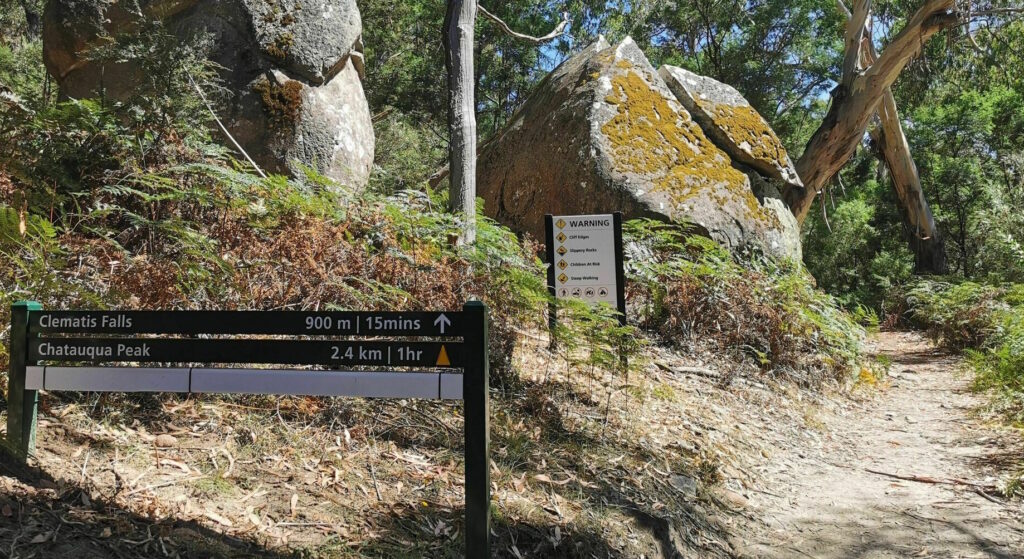
Starting at Halls Gap Picnic Area, the track eases through quiet forest with chances to spot kangaroos and wallabies. The climb finishes with a short rock scramble near the top so a moderate fitness level helps. From the high point the view rolls over Halls Gap to Lake Bellfield with the Wonderland and Serra ranges on the skyline. After rain Clematis Falls puts on a show though the trail can turn muddy and slippery so wear shoes with good grip. The return dips into the cool fern gully at Bullaces Glen then passes old logging remains back toward town. Go early for softer light and fewer people.
Expect a steady climb through peppermint gums that soon turns rocky as the path rises to a narrow ridgeline. The track is well formed yet calls for rock hopping and a few hands-on moves through gaps and under big blocks plus a short footbridge over a deep crack that feels exposed. Good boots help since the stone can be slippery after rain. Best for hikers with solid fitness not ideal for small kids or anyone uneasy with heights. The payoff is wide views over the Serra and Mount William ranges with sculpted cliffs and caves all around. Emus and wallabies often roam the lower slopes. Start early in the cooler months for calmer weather and fewer people. Follow the markers, take a quick photo at the natural rock gateway near the top and watch your footing on the descent.
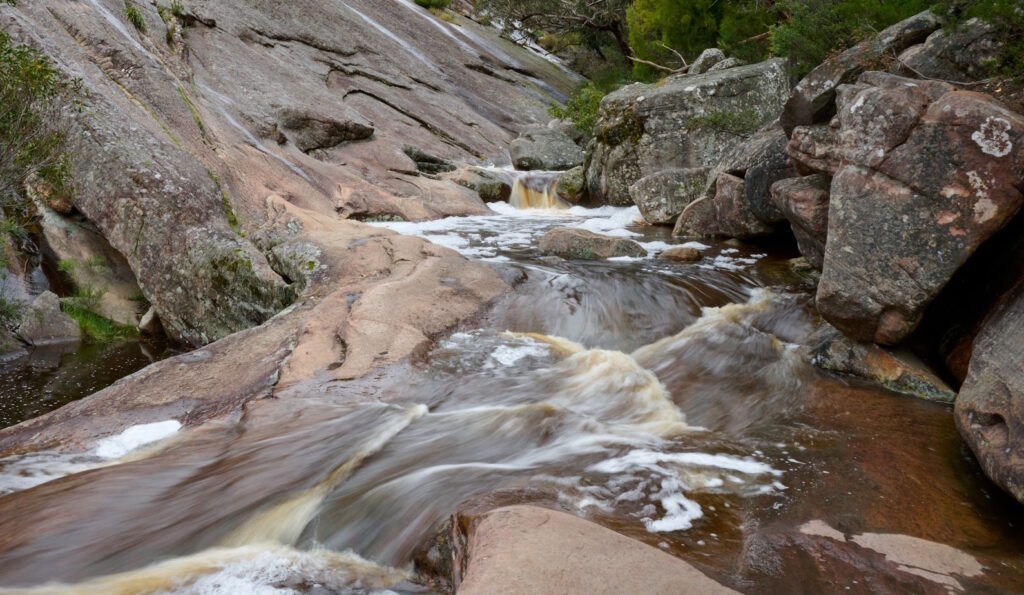
Easy loop from the heart of Halls Gap on a formed track along Stoney Creek past the towering sandstone of ‘Elephant Hide’ and the botanic garden. Venus Baths are shallow sandstone rock pools carved by Stoney Creek with wide smooth slabs that suit a quick paddle in warm weather. The path stays mostly flat with a few steps though rocks near the water can be slippery after rain. Good for families and young kids under close supervision. Expect quiet bush with escarpment views plus impressive boulders and clear pools.
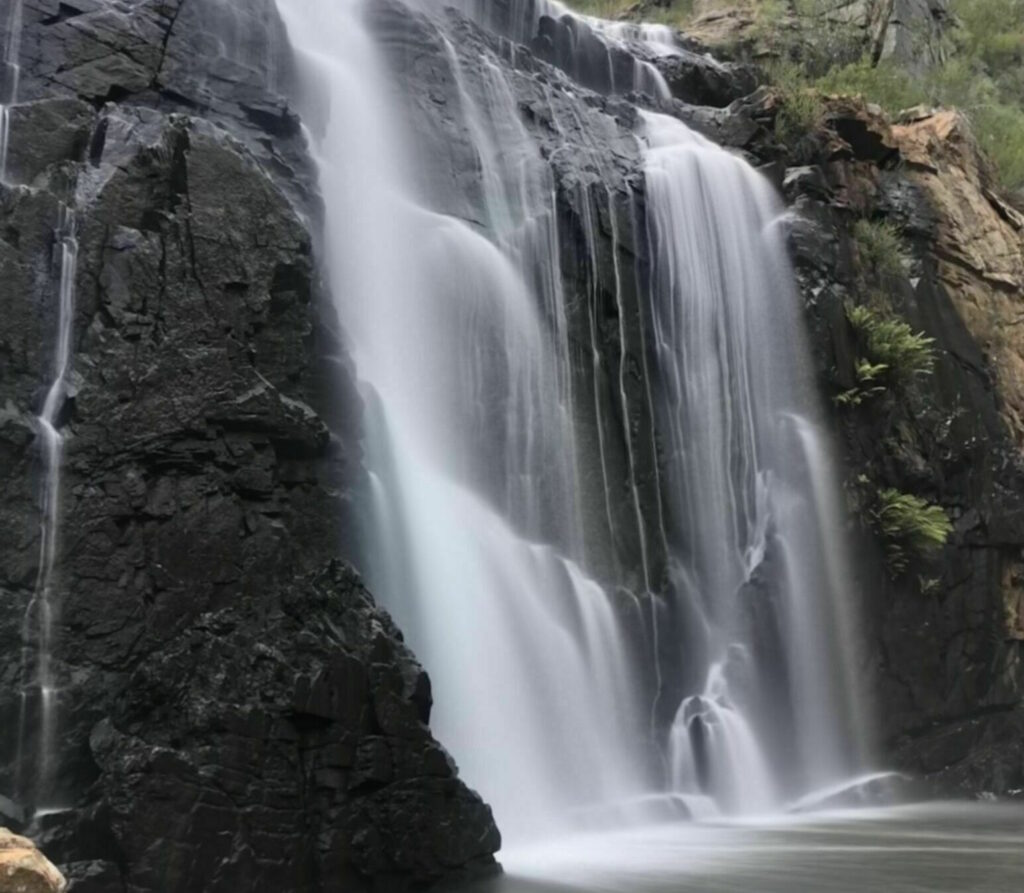
Start with the easy path to the upper lookout. It’s smooth underfoot and works for prams and wheelchairs. The big waterfall runs all year so the view delivers even in summer. If you want more drop to the base on about 260 stone steps with rails. The path narrows in spots and gets slippery in rain. The climb back up is a grind so bring water and decent shoes. Fit walkers and older kids do well while little ones may prefer the top only. Go early for a quieter visit since this place gets busy. The mist at the bottom feels great on hot days. You can follow the river to another small waterfall if you’ve got energy. Quick tip: step past the main platform to the metal grate path for a better angle.
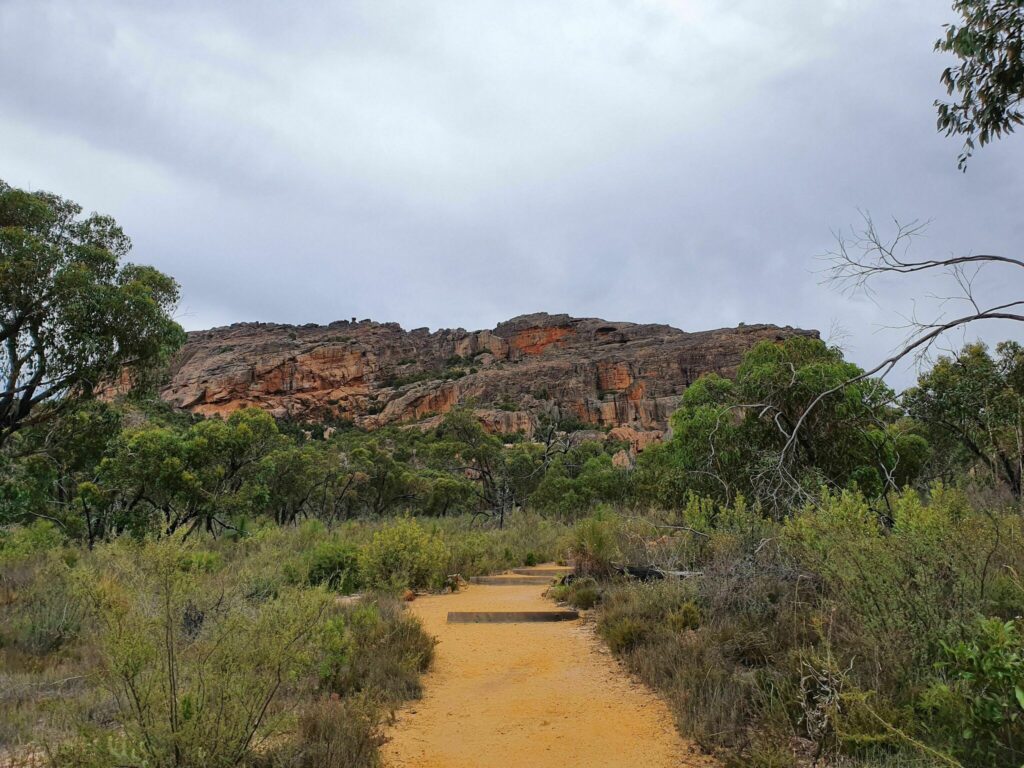
This hike starts as an easy bush track then turns into a steep scramble over rough sandstone to a rocky dome with pockets and caves. Grippy shoes help on smooth slabs that turn slippery when dusty or wet. The route suits confident hikers with good fitness not small kids. Wide views reach over ridges and farmland with sculpted cliffs close by. No shade on the rocks so take a hat and sunscreen. Quick detours into the caves make good photo spots.
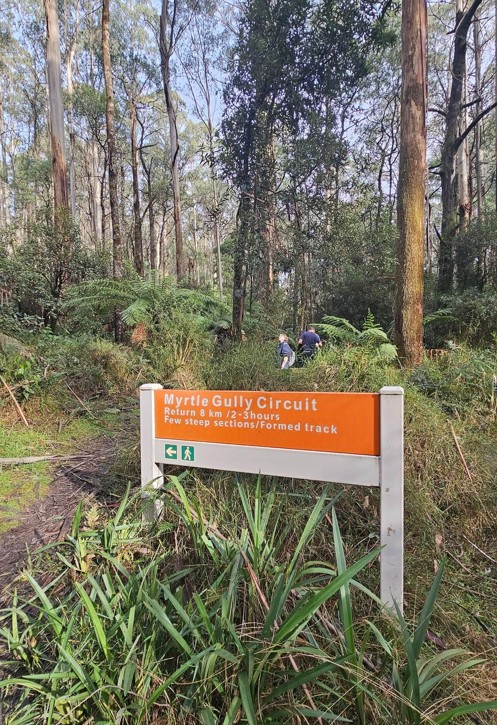
If you’re after a hike that feels far from the city but is still easy to reach, the Myrtle Gully Circuit in Toolangi is a great choice. It’s a 1 hour 30 minute drive from Melbourne’s CBD with plenty of parking available. The 8km circuit offers a wonderful escape into dense rainforest, tall trees and beautiful gullies. It’s a trail that encourages you to forget about technology and life’s challenges, allowing you to fully immerse yourself in nature’s beauty.
Myrtle Gully Circuit Sign
A Glimpse into History
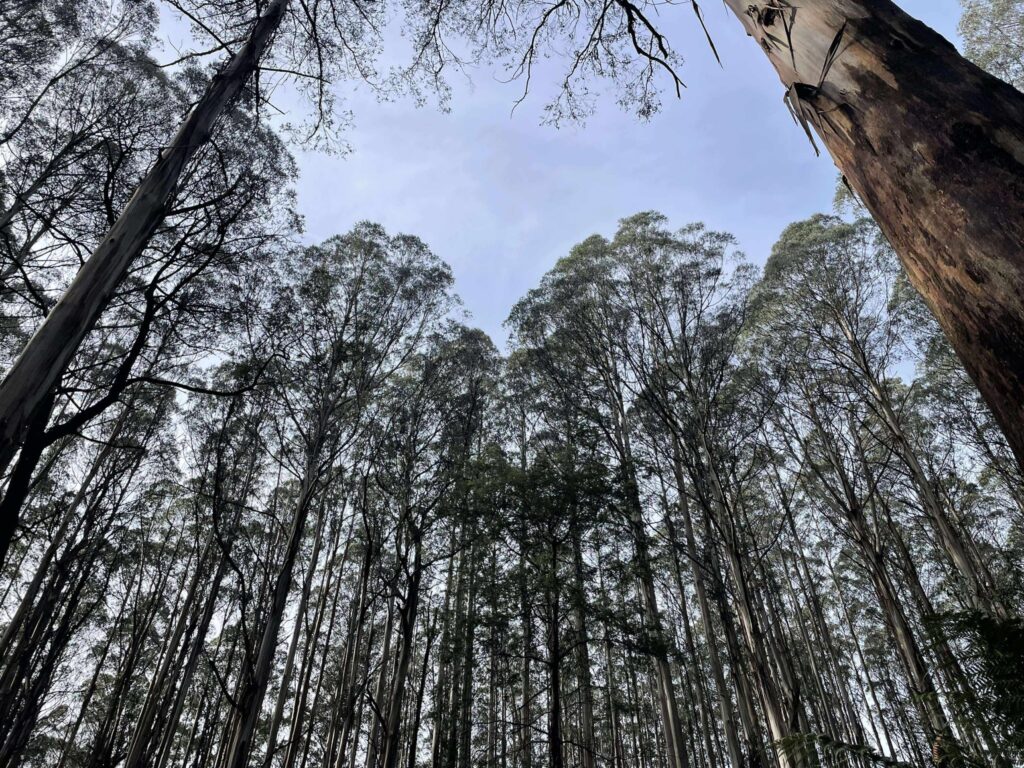
In the early 1900s, the forest served as a major route for timber workers who harvested the tall Mountain Ash trees that dominate the region. These trees, among the tallest flowering plants in the world, shaped the forest as well as the surrounding communities. As you walk the Myrtle Gully Circuit today, you can easily imagine the history beneath your feet, with paths carved by timber workers long before hikers began using them.
Mountain Ash Trees
The Myrtle Gully Circuit
The Myrtle Gully Circuit starts from the Wirrawilla Rainforest car park, which has plenty of parking. The trail is around 8km long and takes up to three hours to finish, depending on how often you stop to enjoy the scenery (which you’ll want to do frequently).
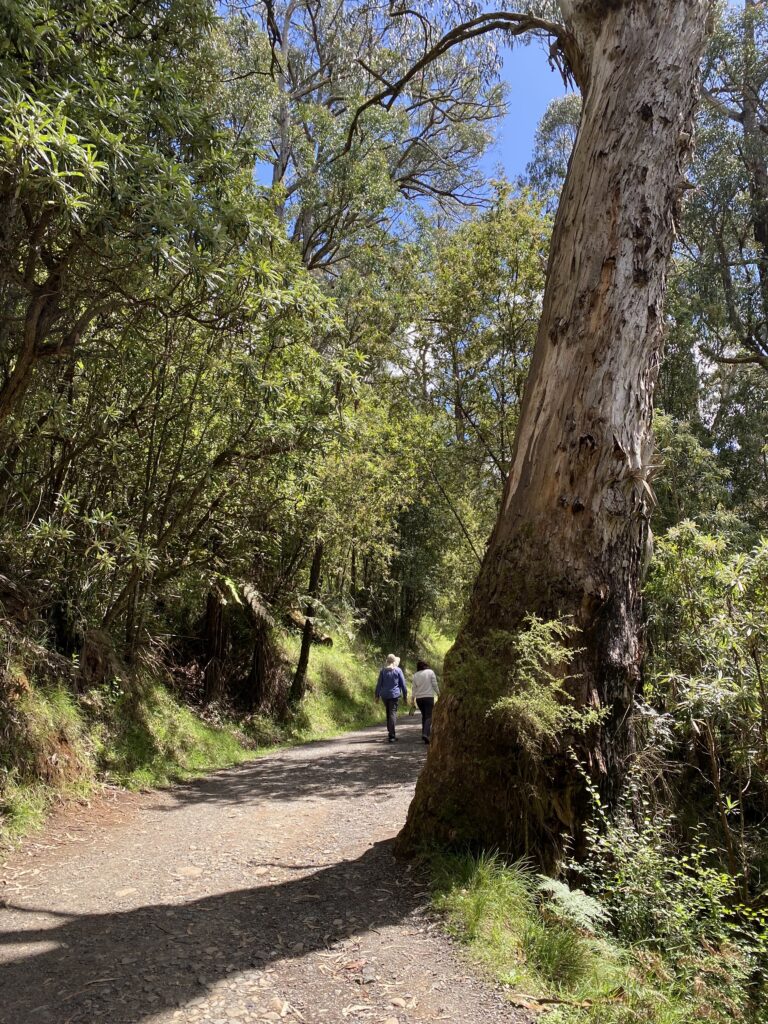
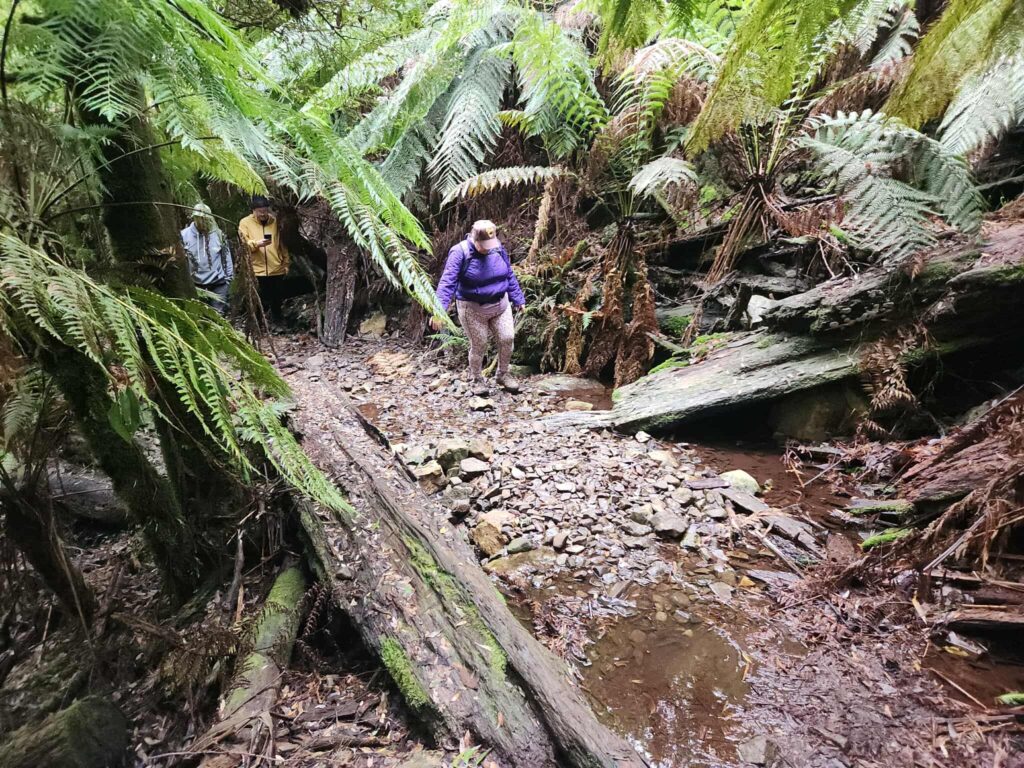
The path winds through green gullies, with small streams crossing it and moss and ferns lining the sides. Towering Mountain Ash and Manna Gums loom overhead, creating a canopy that streams light onto the trail and gives the forest a magical feel. When hiking the circuit in July, the track was especially muddy, with several fallen trees to climb over. This added a sense of adventure but also highlighted the need for proper gear. Hiking boots are essential, and gaiters are highly recommended to keep leeches and water out.
Muddy Track on Myrtle Gully Circuit
Mud, Trees, and a Touch of Wildness
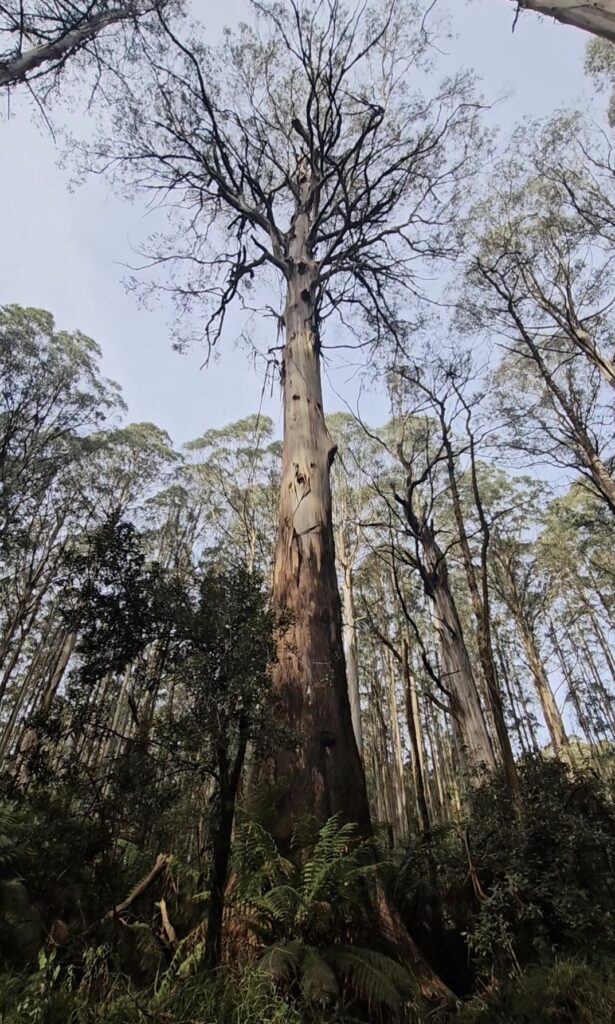
Unlike many polished trails, the Myrtle Gully Circuit keeps you alert. It’s a hike that allows you to truly get lost in the moment. You can’t help but feel connected to the untouched beauty of the forest, with the only sounds being trickling water, falling trees! and the occasional call of a lyrebird.
Towering Tree on Myrtle Gully Circuit
A Rewarding Extension
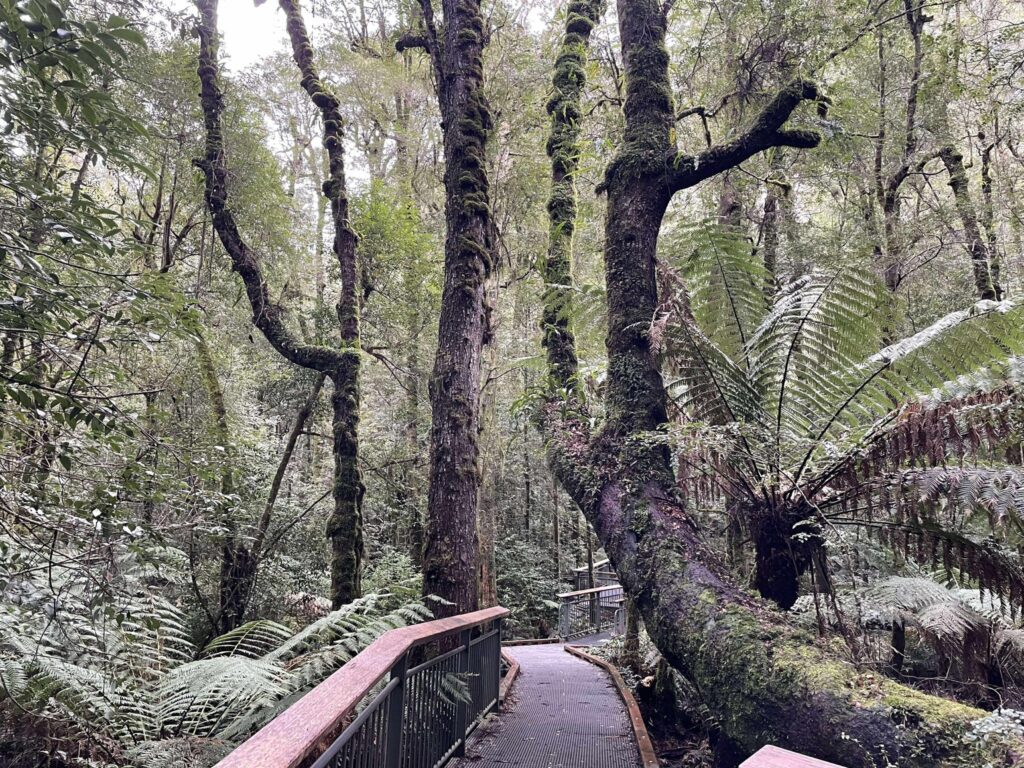
After completing the main circuit and returning to the car park, don’t rush off! Next to the start (and finish) of the Myrtle Gully Circuit is the Wirrawilla Rainforest Walk, a short 1km boardwalk that gives another view of this remarkable forest. It’s an easy stroll; flat, accessible, and perfect if you want to relax after the longer hike. The boardwalk flows through dense myrtle beech and tree fern groves. Because it’s so close, it feels like a natural addition to your day.
Wirrawilla Rainforest Walk
The Myrtle Gully Circuit is a hike that feels both challenging and refreshing. It’s long enough to give you a solid day out in the bush, but not so demanding that it becomes overwhelming. The mud, fallen trees (and even the leeches!) are all part of the experience; reminders that this is a vibrant and ruggedly beautiful forest that doesn’t make things easy for us.
One of the best things about the Myrtle Gully Circuit is how few people you’ll see compared to busier trails near Melbourne. The feeling of solitude is refreshing. It’s just you, the towering trees, and the cool mountain air. It’s a hike that really restores perspective.
If you’re looking for a hike that combines history, wild beauty, and a bit of grit, the Myrtle Gully is highly recommended. Just remember to bring your hiking boots, sense of adventure, and a change of socks for the drive home!
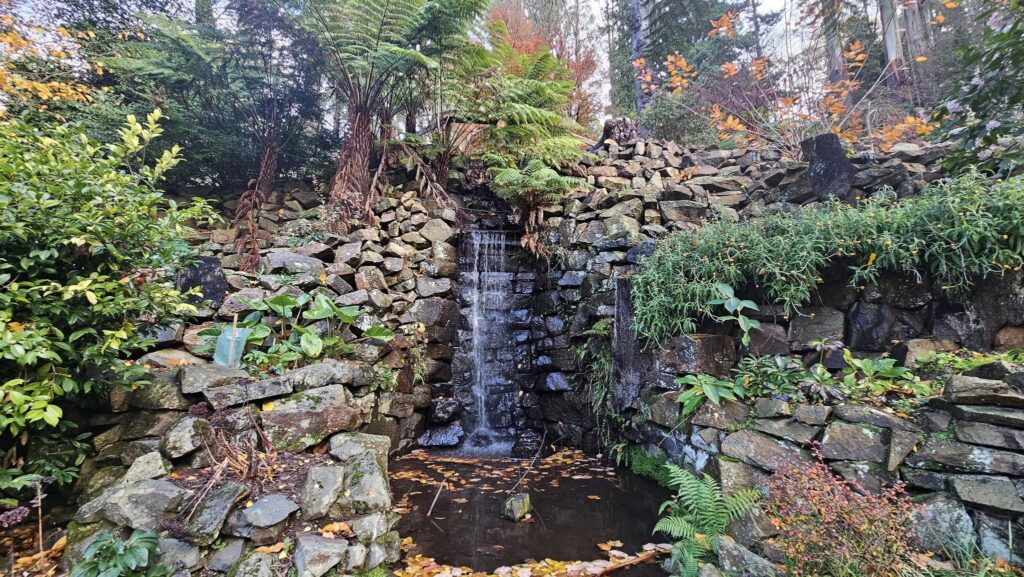
Nestled in the beautiful hills of the Dandenong Ranges is one of Victoria’s most charming short hikes. This loop starts and ends at the stunning Alfred Nicholas Memorial Garden. The trail offers a feast for the senses and a much-needed escape from daily life. You will find a perfect mix of calm forest paths, colourful leaves, and elegant garden design.
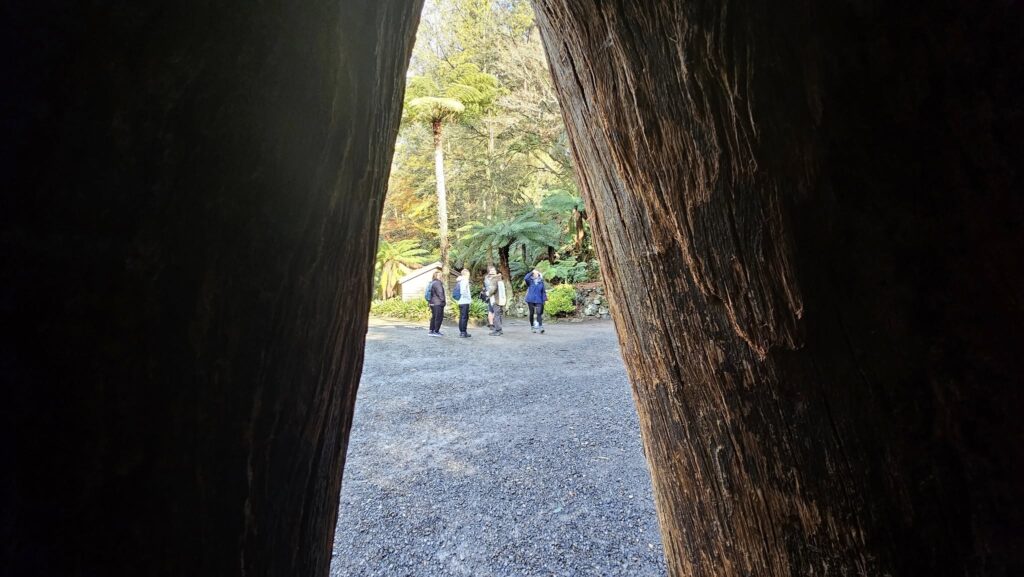
Hollow Tree, Sherbrooke
Start your walk by parking at Alfred Nicholas Gardens on Sherbrooke Road. There’s usually plenty of parking, even on weekends. The earlier you arrive, the more peaceful it feels. Once you enter the gardens, it’s like stepping into another world. Tall Mountain Ash trees rise above you, while winding paths invite you deeper into the landscape.
Alfred Nicholas Memorial Gardens
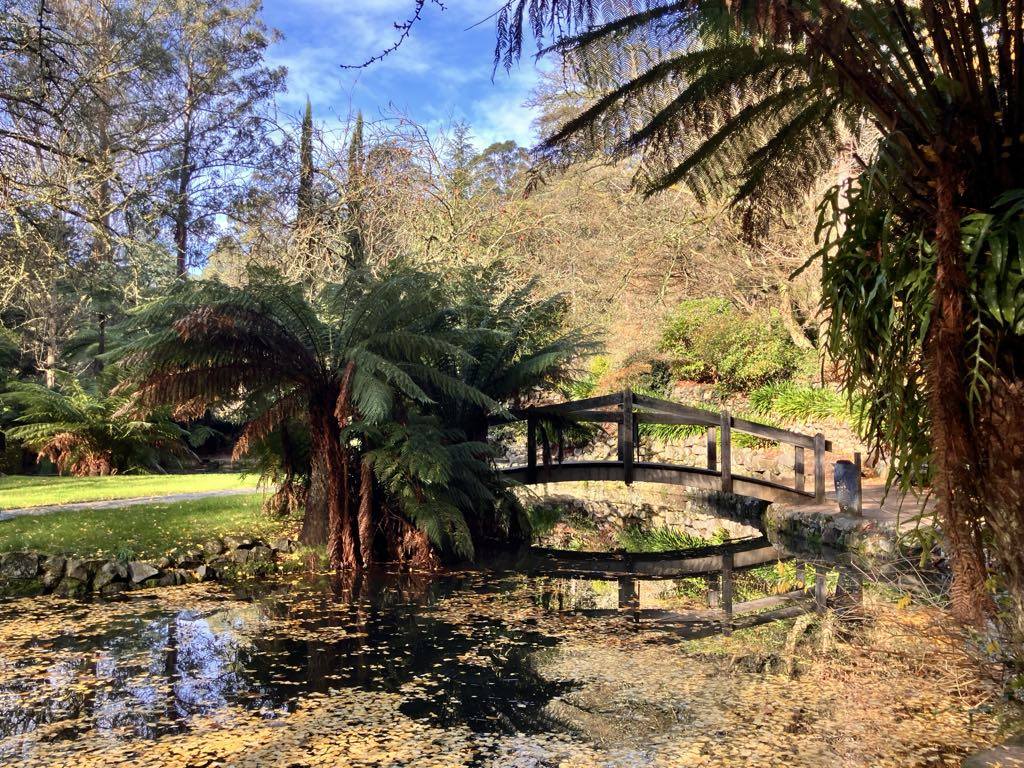
The gardens were once part of Alfred Nicholas’s Burnham Beeches Estate, and today they are lovingly maintained as public parklands. A highlight here is the ornate Boathouse, quietly sitting by the lower lake. It’s one of the most photographed spots in the Dandenongs for good reason. On a calm day, the reflections in the water are truly magical. It’s a place that slows your breathing and helps you forget about your troubles.
From the Boathouse, head back uphill and exit the gardens onto Sherbrooke Road. Be careful as you walk a short distance along the roadside. Lloyd’s Track will then guide you through Sherbrooke Forest. This part of the hike is quieter and less manicured than the gardens. You will see towering gums, soft fern undergrowth, and you might even spot a lyrebird.
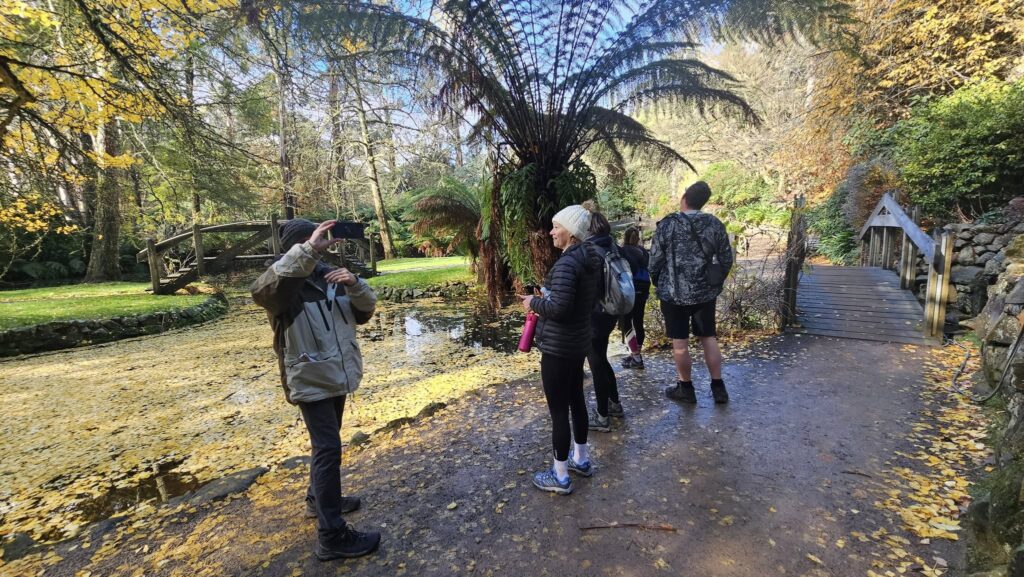
Bridge, Sherbrooke
Continue along the trail until you reach George Tindale Memorial Gardens, another hidden gem that often gets overlooked. Entry is free, and it’s well worth stepping inside. The gardens here have a more curated, botanical feel, with winding paths surrounded by rhododendrons, azaleas, camellias, and maples, all thriving in the mountain air. If you visit in autumn, the leaves put on a colourful show, while spring brings vibrant flowers in every direction. Even in winter, the garden has a gentle, misty charm.
After enjoying your time in George Tindale Memorial Gardens, return to the track and start looping back to Alfred Nicholas Gardens. The return leg of the walk is mostly downhill or flat. You will find plenty of shady forest to keep you cool even on warmer days.
Plan for about two hours to complete the loop. While the trail is only around 6km, you’ll want to stop and soak it all in. It’s not a race; it’s a journey through some of the Dandenongs’ finest natural and cultivated beauty.
This walk reminds us how lucky we are in Victoria to have such beautiful natural spots just a short drive from Melbourne. If you haven’t yet explored Alfred Nicholas Memorial Gardens and the surrounding area, do yourself a favour. It’s the perfect place to slow down, breathe deeply, and reconnect with the world around you.